 |
 |
 |
 |
| Click to view larger versions. | |
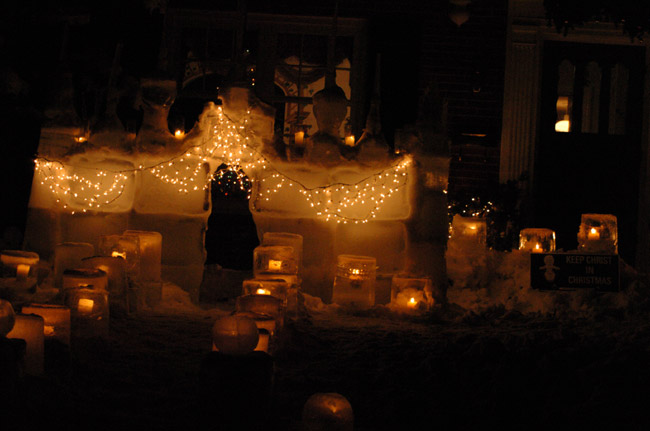
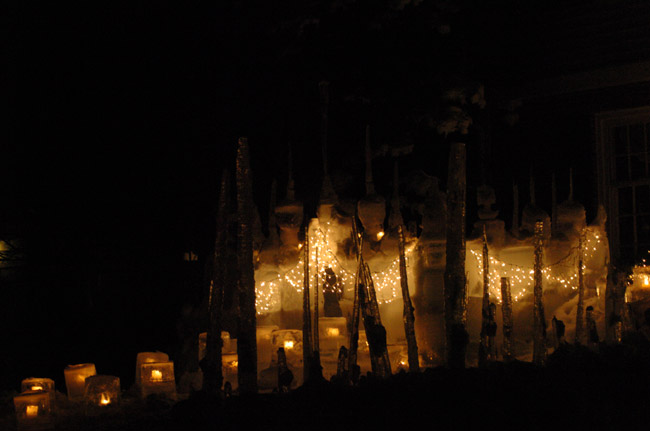
Driving around on these cold December evenings provides one aesthetic benefit: Madison’s prolific Christmas lights. Here are a few scenes I’ve snapped recently.
|
|
|
|
| Click to view larger versions. | |
Driving around on these cold December evenings provides one aesthetic benefit: Madison’s prolific Christmas lights. Here are a few scenes I’ve snapped recently.
The biggest problem seems to be that the talent pool of skilled workers will not able to keep up. Currently there are about 700,000 people working in IT and outsourcing, which is likely to grow up to 2.3 million by 2010, but only 1.05 million new graduates will qualify from local colleges in the next 5 years leading to a shortfall of 500,000 workers! All this despite the fact that almost 2.5 million students graduate in India each year.” From the article: “In IT the growth in Indian exports is expected to come both from the software market, and from ‘traditional IT outsourcing’–such as the remote management of whole systems, a market now dominated by the big global IT consultancies. This is expected to rise from 8% of Indian sales now to about 30% in 2010, while software-development’s share will fall from 55% to 39%. In business-process-offshoring, the big industries will remain banking and insurance. But rapid expansion is also expected in other areas, like legal services.”
Slashdot. discussion.
WIBA is receiving some grief from the Capital Times (part of the $120M advertising enterprise that is Capital Newspapers) over the sale of naming rights to its newsroom to Amcore Bank.
The agreements reflect the proliferation of corporate sponsorships in recent years — think FedEx Field and MCI Center — and the pressure many newsrooms feel to boost revenue. Close alliances between companies and news enterprises, however, raise a special set of issues related to journalistic integrity, ethicists say.
With journalism still under a cloud from some high-profile scandals, newsrooms must go to the greatest lengths to convince the public of their independence and credibility, said Kelly McBride, a journalism ethics expert at the Poynter Institute for Media Studies, a journalism training center.
“This undermines all the efforts we’re making to protect our credibility,” she said. “It creates the perception that the newsroom is for sale to the highest bidder.”
An informed society must understand that advertising, sponsorship or underwriting will always include influence. The real solution, from my perspective, is the ongoing disaggregation of media, with many, many more choices and a number of aggregators.
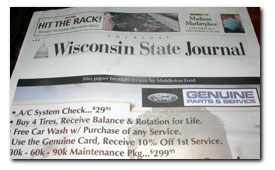
I wonder how sponsorship of a newsroom is any different than wrapping the daily newspaper in a sponsor’s first thing visible full page ad? See a local example here.

My one fleeting contact with Bill Proxmire occured many, many years ago (I was perhaps 10 years old). I recall walking around the Dodge County Fair (Beaver Dam) and my hand suddenly swung away. I looked up and a tall lanky guy shook it and said “Hi, I’m Bill Proxmire”. He was on the campaign trail, one handshake at a time.
We could use his “Golden Fleece Awards” today.
Richard Severo:
Another Golden Fleece Award went to the National Institute for Mental Health, which spent $97,000 to study, among other things, what went on in a Peruvian brothel. The researchers said they made repeated visits in the interests of accuracy.
The Federal Aviation Administration also felt Mr. Proxmire’s wrath, for spending $57,800 on a study of the physical measurements of 432 airline stewardesses, paying special attention to the “length of the buttocks” and how their knees were arranged when they were seated. Other Fleece recipients were the Justice Department, for spending $27,000 to determine why prisoners wanted to get out of jail, and the Pentagon, for a $3,000 study to determine if people in the military should carry umbrellas in the rain.
He returned to Harvard, earned a second master’s degree – this one in public administration – and moved to Wisconsin to be a reporter for The Capital Times in Madison.
“They fired me after I’d been there seven months, for labor activities and impertinence,” he once said, conceding that his dismissal was merited.
 |
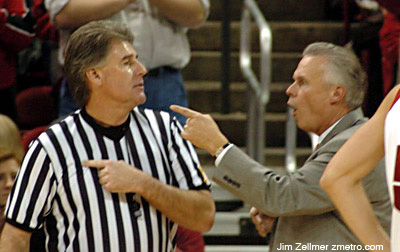 |
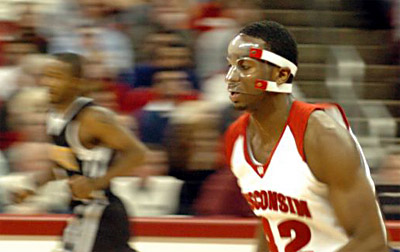
I enjoyed Thursday evening’s UW – UW-M basketball game at the Kohl Center (the Badgers won 74-68). These photos represent my simple attempt to capture a bit of the event. Enjoy. (My favorites are the two shown above).
Author J. Bryan III once wrote, “My Uncle Jonathan’s first car, circa 1910, was an E.M.F. The initials represented the manufacturers, Everitt, Metzger and Flanders of Detroit. But a long series of breakdowns led to their being translated as ‘Every Mechanical Fault'” (or “Every Morning Fixit,” as Nick Georgano states in the 2000 edition of The Beaulieu Encyclopedia of the Automobile).
Fortunately, no car today could merit such nicknames, right? Wrong.
Designer Kenneth Melville explains how just how tough it is to build a $6,000 car, including some swallowing of pride
Cars prices have accelerated steadily for the last decade, thanks to an increasing reliance on technology and ever-more luxurious interiors. Even a compact car can easily cost more than $20,000. Shifting into reverse, French auto maker Renault decided in 1998 to design a modern car with state-of-the-art safety features costing only 5,000 euros ($6,000). Renault’s strategy was to create a car for people in emerging markets who have never owned an automobile — some 80% of the world’s population.
Dave Winer posts some pix from his trip to New Orleans. My 2002 photos are here.
A couple of hours before the council meeting in the same room, they attended a presentation about the City of Madison Comprehensive Plan. This plan, mandated by state law, and a work in progress over the last couple of years, will serve as a long-term roadmap for the city’s infrastructural future. It is also up for a vote on Tuesday, Dec. 13 by the full council, though it is likely to be referred to a subsequent meeting in early January.
For now, however, these subsidies are here — but who, exactly, gets them?
For that answer, I encourage you to check out the Environmental Working Group’s Farm Subsidy Database. Through many, many FOIA requests, they have produced. an interactive website chock full of interesting facts. For example:
Half of all subsidies go to only 5% of Congressional districts. Four commodities —corn, wheat, rice and cotton— account for 78 percent of all ag subsidies. EWG also has an interesting proposal to reallocate the ag money away from subsidies but towards rural areas where farmers actually generate high value-added goods already.
