Most important is to be more intentional in your digital media consumption. Do not let the algorithm decide what you should indulge. Choose consciously what enters your mind. Understand that you are not bored, you are being processed. It is not that you are lacking discipline that makes you easily distracted, it is because you are in the machine optimised for brainrot.
I’ve been writing the following since image stabilization first appeared: in situations where you don’t need it—e.g. when you’ve got a shutter speed that should freeze even that fast moving plane—stabilization is best turned off. While best case is that stabilization corrects all problems, the worst case is that it introduces new flaws. A likely case is that you get some edge aliasing.
Now the English huddle by the radiator, sucking up CO2 and mould spores. The houses struggle to feel warm because it’s 80% humidity inside.
The issue is the docks and loading facilities. They can only load about 4.5 Mbpd.
For decades, state and city leaders, many of whom have no private-sector experience themselves, have prioritized political agendas, pet projects and ideological experiments over practical prosperity. Consider the fate of Nicollet Mall.
Christianity as we know it—the all-are-welcome Church, with fairly undemanding required rituals, no daily prostrations, no rules for separating cheese blintzes from corned beef, just confession, Communion, and prayer—owes more to Paul than to anyone else, perhaps even more than to the narrowly parochial and Jerusalem-centered Jesus. It was Paul, almost single-handed, and against the suspicions of Jesus’ original disciples, who journeyed and pleaded and made the faith portable. Quite a character! So much so that, in the nineteen-fifties and sixties, the director Frank Capra was eager to make a movie of Paul’s life starring Frank Sinatra. And though it sounds ridiculous when you say it, the casting actually makes sense. Whoever Paul was, he must have had charm, energy, and intensity, and been equally popular with the first-century equivalent of bobby-soxers and of made men. Raphael’s great image of Paul preaching in Athens, arms outstretched, crowd rapt, could be the Chairman on tour in Greece.
Jernmarker, or iron fields, was chosen as the Danish word of the year in December after the solar backlash swayed municipal elections and prompted some councils to pull projects. The spectre of barren metal landscapes has since returned to the campaign trail as Danes prepare to vote in national elections on Tuesday. “We need more common sense in the green transition,” Støjberg said in the first televised debate between party leaders last month.
The clearest illustration of this dynamic came in January 2024, when Sullivan flew to Bangkok to meet Chinese Foreign Minister Wang Yi and asked Beijing to use its “substantial leverage with Iran” to restrain the Houthis. The White House said it would “wait to see results.”. The results came quickly. According to Deputy Secretary of State Kurt Campbell, Beijing not only refused the request but also encouraged the Houthis to target other nations’ shipping. As Red Sea traffic collapsed, China-linked ships increased their transits and gained a commercial advantage. Sullivan had asked China to shut down an operation that was serving Chinese interests. Instead, it increased its mischief.
Minnesota Mao — a new documentary from the team that brought you The Fall of Minneapolis. Coming June 4.
Alcorn tapped into the paper’s public API to create a dashboard that provides some extraordinary insights.
Kelda Roys (state senator and running for gov.) a village resident calls in and says she is dismayed how Pres Imes is targeting Lotfi.Says she has known Lotfi for more than 10 years and has appreciate “the care she puts into things.” She’s also concerned about how village is portrayed in the news.
So the question is not whether to use files. You’re always using files. The question is whether to use a database’s files or your own. And for a lot of applications, especially early-stage ones, the answer might be: your own.
“Mr. Biden lives abroad.” Those four words in a filing from Barry Coburn confirmed what had long been rumored about his client: Hunter Biden has left the country as his former lawyers and creditors seek millions in unpaid debts. He added, “He cannot pay his current lawyers.”
But now, Microsoft is stepping back from the industry it helped create, telling some companies that it is pausing future purchases of carbon removal credits, according to two people familiar with the matter who asked to remain anonymous because they were not authorized to speak publicly. The news was first reported by Heatmap.
Dems have been playing this same simple game for years with their gullible followers. They pretend to want something their “base” wants, but always manage to fall a few votes short. Gosh darn! Vote Dem next time and we’ll get it for you! I wrote in 2010:
Only guy who kept his cool, until the very end, was the dude who had been riding for 6 days straight from California, where he’d just been released from serving 10.
There’s an old, bad idea that’s been trying to resurrect itself on X in the last couple of days. Which makes it time for me to explain exactly why, in the age of LLMs, open-sourcing your code is an even more important security measure than it was before we had robot friends. The underlying principle was discovered in the 1880s by an expert on military cryptography, a man named August Kerckhoffs, writing long before computers were a thing.
The largest municipal embezzlement in American history ran through one account with one signer. Every small-town government in America has the same setup.
Ex-UT football coach Darrell Royal had a saying that captures this moment for America: “Luck is what happens when preparation meets opportunity.” Natural gas – abundant, affordable, powerful – was both the opportunity and the preparation in this instance.
Enriching uranium is an American cultural practice, anyone else doing it is appropriating our culture.
It’s become a Schrödinger’s Strait, open and closed simultaneously- depending on the observer. Iran declares it open, the US blockades it, then vice versa. We have satellites than can read newspaper headlines but the public lacks hard data on ship movements.
“If My people, which are called by my name, shall humble themselves, and pray, and seek my face, and turn from their wicked ways; then will I hear from heaven, and will forgive their sin, and will heal their land.”
The “YIMBY” (“Yes in my backyard”) voting scale is intended to be an objective measure of the pro-housing alignment of Madison Common Council Members. However, you should be highly skeptical of any measure that purports to be “objective,” because every measure of attitudes requires some value judgement. Our measure is no different!
Your home is photographed and publicly visible on at least 5 websites right now.
Google Maps. Apple Maps. Bing Maps. Zillow. Redfin.
In 1970, the UCC reported its highest ratio of members to churches: 291 to one. That’s actually a really healthy number. But now the figure has dropped to only 152 members per congregation. In other words, they aren’t closing churches fast enough to keep that ratio up. To maintain a ratio of 291, it would require the UCC to have only 2,350 churches. That would mean shutting the doors of over 2,000 congregations.
“DPI cannot lower academic standards in secret and simply expect parents and students to accept the outcome,” IRG General Counsel Jake Curtis said in a statement. “Working groups created by DPI are not exempt from Wisconsin’s Open Meetings Laws. Taxpayers funded this process, but DPI shut them out. A state agency doesn’t get to spend public dollars, make consequential decisions, and then hide the process from public scrutiny.”
The Department of Public Instruction invited 88 education professionals to the session to review and adjust cut scores for the state’s standardized tests. It later adopted lower standards for proficiency in reading and math.
IRG has long maintained that the changes were designed to mask persistently low student performance in Wisconsin public schools. Its complaint does not seek damages but asks the court to invalidate the standards if violations are confirmed. The Department of Public Instruction did not immediately respond to the complaint.
The uproar centres on a citizens’ initiative to restrict, but not ban, motorised traffic in the city centre — a deeply divisive policy that has become a culture war flashpoint in many countries, pitting environmentally minded urban residents against suburban commuters.
This is what happens when you let natural monopolies operate without oversight. They don’t compete on price or quality. They extract rent.
But new research from UCLA has found that, in several specific cases, sections of the building code – which is written and updated by the International Code Council (ICC) – are either outdated, or are not grounded in sound building science. The result: Buildings that are both more costly to build and give builders less flexibility in the use of modern technologies and techniques.
If David Foster Wallace were alive today, he’d be reporting from the bar in a beachside town on the Omani coast– taking notes on a napkin about the particular quality of silence in a hundred-room hotel with three guests, watching tankers drift towards, but never quite reach, the Strait of Hormuz. That’s our inspiration here, if DFW was also concerned with finding alpha.
…In mid-2025, Hyppönen pivoted from cybersecurity to a different kind of defensive work. He became the chief research officer at Sensofusion, a Helsinki-based company that develops an anti-drone system for law enforcement agencies and the military.
You might have heard about “China Speed” and how local automakers can develop a brand-new model in two years or less. By comparison, legacy brands often need twice as long, and sometimes even more, to engineer a new product. With an astronomical number of companies developing vehicles at a record pace, it’s no wonder it feels like China is launching a new car every other day.
The risk is that teams everywhere start using AI to produce products that are globally polished but contextually shallow. A fintech interface can sound sophisticated while still failing to explain timing, settlement behavior, or support expectations clearly. A B2B SaaS site can look world-class while saying almost nothing a real buyer would recognize as grounded. A devtool can have excellent marketing language and still ignore the practical pains of understaffed teams dealing with on-call load, compliance pressure, and cost constraints.
The best tools for sending an email if you go silent.
Welcome to the Atlas of Arda, a project aimed at celebrating Tolkien’s incredible work through hand-drawn cartography, artwork and illustrations that act as a reference to dive deeper into the beautiful world Tolkien created.
The settlement also includes an agreement by Deere to provide “the digital tools required for the maintenance, diagnosis, and repair” of tractors, combines, and other machinery for 10 years. That part is crucial, as farmers previously resorted to hacking their own equipment’s software just to get it up and running again. John Deere signed a memorandum of understanding in 2023 that partially addressed those concerns, providing third parties with the technology to diagnose and repair, as long as its intellectual property was safeguarded. Monday’s settlement seems to represent a much stronger (and legally binding) step forward.
This project reverse-engineers Google’s SynthIDwatermarking system – the invisible watermark embedded into every image generated by Google Gemini. Using only signal processing and spectral analysis (no access to the proprietary encoder/decoder), we:
As part of the event, interoperable digital tools were introduced intended to streamline care and improve the patient experience. Highlights included:
Digital data access and check?in (“Kill the Clipboard”), allowing patients to securely share information with a simple scan on their phone.
Personalized health applications, offering tailored guidance on nutrition, wellness, and chronic disease management—extending care beyond clinic walls.
The BWB, due to its very dominant parasitic drag, about 2/3 of total drag between 30,000ft and 40,000ft, needs to initiate the cruise above 40,000ft, where the parasitic drag has declined below 60% of total drag. If the cruise is done below 40,000ft, the BWB has a higher total drag, which means it consumes more fuel than the NMA.
Those contributions have ranged from $300,000 from Colorado’s state tourism board to $2.7 million from Texas’ state and local tourism boards.
Williams-Smith confirmed that Visit Milwaukee will contribute $450,000 ($150,000 per year) for its three-year contract with the Michelin Guide, which runs from 2027 to 2029.
Other American Great Lakes DMOs did not immediately disclose their contributions.
Earlier this month, Carter Bank sold the (Greenbriar) loans to “an unaffiliated third party,” according to a filing last week with the U.S. Securities and Exchange Commission. The loan principal was $209.48 million, and Carter received $289.48 million in cash in the transaction. The company that bought the debt was TRT Holdings, owned and operated by Dallas billionaire Robert Rowling and his son Blake.
This city and its beaches, with their pacific blue waters during the summer months (which has earned us the moniker “Malibu of the Midwest”) and tempestuous, Gordon Lightfoot-inspiring gray deeps during winter, is forever home. This attachment, already firm for me as a teen (when a good number of classmates wanted nothing more than to be gone), became concrete during my years away. Charleston and Coronado are fine places to live, both effortlessly beautiful, and the 250,000 nautical miles in the U.S. Navy’s bilges and maintenance shops were certainly an experience for which I remain grateful, but the snatches of days home on leave had more life and light in them than the months away.
The FAA counted 370,286 active student pilots at the end of 2025, up from 345,495 in 2024 and 222,629 in 2020. Total active pilots also rose to 887,519, compared with 848,770 a year earlier.
Aadam Jacobs has secretly recorded over 10,000 local concerts since 1989. Now, they are cleaned up and ready to listen to for free online.
Instead, the way Anthropic built that kernel is straight out of classical symbolic AI. For example, it is in large part a big IF-THEN conditional, with 486 branch points and 12 levels of nesting — all inside a deterministic, symbolic loop that the real godfathers of AI, people like John McCarthy and Marvin Minsky and Herb Simon, would have instantly recognized.*
The pilots had never been trained on it because Boeing determined that disclosing MCAS would require simulator training, which would make the MAX less competitive against the Airbus A320neo. Southwest Airlines, for example, which ordered hundreds of MAXes, required Boeing to pay $1m per airplane if simulator training was required.
So I was surprised when, in early 2024, Chalker sent me an e-mail introducing himself. He had read an article I wrote for this magazine about an innocent American caught up in spy-vs.-spy battles among Persian Gulf monarchies, and he wanted to talk. We arranged to meet at his office, high in the World Trade Center. Now fifty-four, Chalker is nearly six feet tall and barrel-chested, with short brown hair and a thick, graying red beard. His suite in the World Trade Center is cavernous, with a view that sweeps from the Brooklyn Bridge to the Statue of Liberty. A collection of historic encryption machines is displayed in vitrines in the main room, and in his corner office he keeps half-empty bottles of obscure liquors from around the world. The whole place could have accommodated dozens of people. But, aside from a receptionist, he appeared to be alone.
If implemented, FAA’s plan will increase airline costs and reduce airline quality. In fact, airlines and FAA need to switch this around to where airlines/users do the telling and FAA/ATC does the listening. Next, the FAA’s $31.5 Billion Brand New ATC System (BNATCS) will not reduce airline delays since it fails to focus on the root cause of delays (random Point Overloads). That said, BNATCS is a positive for equipment replacement, which is needed.
Frankie slathered a plain Italian roll with Cheez Whiz, just like his father liked to do. Then he layered on a few thin slices of rib-eye with a sprinkling of sautéed onions. No mushrooms, no sesame seeds. Just a splash of bell pepper juice, which had always been his thing.
Once the enemy’s center of gravity is identified, Clausewitz advised that this source of power should be struck with concentration. He emphasized focusing strength against the decisive point, not spreading effort across every available target. Speed, mass, and concentration matter. But they only matter if applied against the thing that actually holds the system together.
El Paso Mayor Renard Johnson held a news conference that Wednesday morning, where he challenged how the FAA had handled the situation. “I want to be very, very clear that this should’ve never happened,” he said. “You cannot restrict airspace over a major city without coordinating with the city, the airport, the hospitals, and the community leadership.”
“In the months that followed, US tariff policy changed more than 50 times, spanning rate increases, rate decreases, new product exemptions, and new product inclusions.”
In that sense, the delay in “taking” the Strait, and the challenge issued to US allies to do it themselves, is not indecision. It is the negative moment Hegel insisted was necessary for history to move. Only by withholding the old guarantee, and by saying so out loud to those who depended on it, can Trump hope to end the free ride.
In 1903, Wright received a commission to design a house in Oak Park in Illinois for Edwin Cheney and Mamah Borthwick Cheney. The two families became close. Mamah was highly educated, fluent in several languages, restless within the constraints of middle-class respectability. She and Wright eventually fell in love. Both left their spouses; Wright abandoned his wife Catherine and their six children, and Mamah left her husband and her own children. The scandal was immediate and vicious. Newspapers branded them adulterers and deserters. Wright lost clients. He fled to Europe with Mamah for a time, then returned to Wisconsin to build a home for them on a hill above the Wisconsin River – Taliesin, ‘shining brow’, a house meant to rest on the land like a crown. It was conceived as refuge: a place where he could work, love and live according to his own sense of integrity rather than the judgments of Oak Park.
That is why The Art of War endures. It is not a guide to battle. It is a framework for thinking about war as a contest of wills, shaped by political purpose, constrained by cost, and decided not by destruction, but by decisions.
“As in every sport, it’s always first the coach that has to go. At the highest level in sports, this is part of the job. You have to accept that.”
LKY watched in disbelief as the superpower that had promised to hold the line simply walked away.
I have lived in Europe and traveled there extensively. This is deadly accurate.
German men need military permit for extended stays abroad
I am often mocked by my Wall Street friends when I tell the story of the “collapse of American medicine”. It is a direct result of two laws: 1. HITECH act of 2009 that implemented excessive cost and regulations on private practices and 2. ACA “Obamacare” law implemented in 2010. The cumulative effect of these laws was:
DHS asks for detainer of criminal illegal migrant Jose Medina-Medina accused of murdering Loyola University student Sheridan Gorman
Frederick Brooks identified the same dynamic in software development in 1975, watching IBM’s System/360 project illustrate his emerging thesis that adding people to a late project makes it later. Communication overhead grows faster than headcount, coordination costs compound, and every new person contributes their capacity along with their relationships to everyone else. Those relationships require maintenance and produce misalignment and generate the need for more meetings to address the misalignment those meetings created.
Kwon was pregnant when she was killed. Prosecutors said state law does not allow a homicide charge for an unborn child unless the child was born alive. They also said there was insufficient evidence to file a manslaughter charge because there was no indication Goosby knew Kwon was pregnant.
To operate in Madison, the city’s street vending coordinator Meghan Blake-Horst said, the owners needed a street vending license, and they cannot vend in any of the city’s high-density vending locations. The owners also must follow city vending rules, she said.
To keep track of the money, Darling created a spreadsheet that listed the names of writers, the payoffs they received, and the articles that resulted from those payoffs.
The airport perks for Congress may be drying up, not a minute too soon
Over 11,000 munitions in 16 Days of the Iran War: ‘Command of the Reload’ Governs Endurance.
Since 2020, the Schustermans have donated $3.29 million to the Democratic Party of Wisconsin, Governor Tony Evers, Attorney General Josh Kaul, and Supreme Court Justice Susan Crawford.
The 83-year-old US Air Force veteran who was randomly shoved onto the subway tracks by an illegal migrant on the Upper East Side has died from his injuries — and his alleged killer has been charged with murder. Grandfather Richard Williams succumbed to his injuries after he was allegedly pushed onto the tracks with another man while waiting for a train at the Lexington Avenue-63rd Station just before noon March 8.
On March 23, 2026, the Hong Kong government changed the implementing rules relating to the National Security Law. It is now a criminal offense to refuse to give the Hong Kong police the passwords or decryption assistance to access all personal electronic devices including cellphones and laptops. This legal change applies to everyone, including U.S. citizens, in Hong Kong, arriving or just transiting Hong Kong International Airport. In addition, the Hong Kong government also has more authority to take and keep any personal devices, as evidence, that they claim are linked to national security offenses
The central idea is that it mimics physical gearshifts, despite the powertrain not having any ratios. It does this by interrupting the torque from the motor, to give the effect of dipping the clutch and interrupting drive; this is accompanied by the car’s electronic brain revving the petrol engine to match a simulated gearchange – and its repertoire includes regular or rushed cog-swaps, up and down the ’box. The blipping and rev-matching on downshifts is a thing of aural beauty, each tug on a steering wheel paddle eliciting a crescendo of revs and a jolt your body can feel. It’s a feeling amplified by the S+ Shift’s rev counter, showing the engine speed rising and falling.
One story Bevil Hogg told in the new documentary, “The Journey: The Untold Story of Trek,” was how he and his co-founder Dick Burke came up with the name “Trek” at the Pine Knoll Supper Club in Lake Mills.
Why do the BWBs have such large wetted areas when they lack a fuselage and empennage? It’s because they lack a tailplane! Why does a lack of a tailplane force a larger BWB wing?
The truth. In the mainstream media. By a professor. And written well. Four things I thought I’d never see again in my lifetime.
KitKat, owned by Swiss food giant Nestle, told AFP on Saturday that “a truck transporting 413,793 units of its new chocolate range has been stolen during transit in Europe.” The shipment disappeared last week while heading between production and distribution locations, the company said.
The Ferrero Group is owned by Italy’s richest family and built a $36B confectionary empire on Nutella, Ferrero Rocher, TicTac and more.
One or two health systems controlled the entire market for inpatient hospital care in nearly half (47%) of metropolitan areas in 2024.
This just may be the GREATEST campaign video of all time. Spencer Pratt (@spencerpratt) is a GENIUS. He’s taking out the trash.
Forgotten in the din of war is the small, multi-hued island called Hormuz that sits outside the port city of Bandar Abbas. There must be a sense of déjà vu as the island squirms in the glare of international media and braces for yet another joust amongst suitors vying for control over one of the world’s most strategic maritime routes. It may also be looking wistfully towards India as it recalls its ancient ties with merchants from Gujarat and the Malabar coast and the subsequent protection provided by Bombay.
In search of Banksy, Reuters found the artist took on a new identity. “It appears that if people find a Banksy added to their wall, most of them call Sotheby’s rather than the police,”
So apparently we had a full-fledged Dreyfus Affair involving a billion dollar naval vessel getting torched and nobody acknowledges it.
As air power collides with geopolitical reality, the only certainty is that this conflict will permanently scar the Middle East. How did we get here and what happens next?
Welcome to The Uncomfortable, the brilliantly named brainchild of a Greek architect named Katerina Kamprani, who specializes in designing “deliberately inconvenient everyday objects.” My favorite is a fork with a chain handle (shown above), but almost all of her creations are clever, funny, and thought-provoking. Sometimes you have to see examples of bad design to make you appreciate how much we take for granted about gooddesign.
“Handbook on Guided Missiles” 1946 War Department report on German & Japanese rocket powered missiles & aircraft. This rarely-seen classic (scanned from a photocopy) provides a vast pile of information, including a great many diagrams. Air Doc 26 here. More.
Physician incomes are highest in the United States, and a decomposition shows that this mainly reflects differences in overall income distributions, rather than physicians’ locations in those distributions. This suggests that broader labor market differences, and thus physicians’ outside options, drive absolute incomes. Shifting US physicians’ incomes to match relative positions in other countries’ distributions would only marginally reduce healthcare spending.
Epic uses this to frame the entire suit as litigation-as-leverage rather than a genuine legal dispute. Perhaps that’s telling in some ways about respective company cultures- one saw it as an olive branch, the other saw a weapon. In any case, the optics intended could backfire, as judges generally do like seeing that a plaintiff tried to resolve things privately before burning judicial resources
The method is simple: set a goal, measure progress, verify against real records, repeat. The AI searches public archives, cross-references birth certificates against cemetery records against church books, and logs everything it finds (and everything it doesn’t).
The most incisive feedback from the docket argues that ONC’s historical focus on EHRs has created a structural failure in imaging interoperability. Because EHRs generally store only textual metadata or web links—not the multi-gigabyte DICOM files themselves—certifying the EHR accomplishes very little if the underlying PACS remains a proprietary, closed system Epic,
Awlaki, the New Mexico-born al-Qaeda cleric, was the first American citizen to be targeted and assassinated by a US government drone strike, in Yemen. Awlaki’s killing became a potent tool for radicalisation and inspired attacks by followers in the West.
I went to the New York Times to glimpse at four headlines and was greeted with 422 network requests and 49 megabytes of data. It took two minutes before the page settled. And then you wonder why every sane tech person has an adblocker installed on systems of all their loved ones.
A Mexican athlete said he was kidnapped and forced to compete for his life in a tournament of gangs. But was he actually playing a different game?
The math is simple and devastating. The United States has roughly 15 billion cubic feet per day of operational LNG capacity. Another 17 bcf/d is under construction. Another 19 bcf/d has been approved but hasn’t broken ground… the capacity Biden froze. If those frozen terminals had been approved on schedule in early 2024 and broken ground immediately, some would be approaching operational status in 2027-2028. Instead, they’re just now restarting the approval process after fourteen months of lost time.
The Globe and Mail sparked a debate when it reported that Canada’s GDP per capita has fallen behind Alabama’s. The comparison rattled Canadians and triggered a wave of criticism about the validity of using GDP per capita as a measure of national prosperity. Critics argue that GDP is a flawed metric, pointing to legitimate measurement challenges. But these measurement issues affect every country. The question is not whether GDP per capita is perfect but whether Canada’s trend relative to our peers signals deeper
In five or ten years, we may see almost no lending practices that resemble what is happening in this era. We will look back and say: that was a really bad way of conducting business. The question is whether we learn that lesson the clean way or the hard way.
William Faulkner once said, “To understand the world, you must first understand a place like Mississippi.” This week I had a chance to test that principle for myself, including a visit to Faulkner’s home in Oxford, Mississippi. I spoke at the University of Mississippi’s The Declaration of Independence Center for the Study of American Freedom about my book, “Rage and the Republic: The Unfinished Story of the American Revolution.” As I often do, I decided to take some pictures as I explored the campus and the nearby environs of Ole Miss. This is an extraordinary place filled with the nicest people you could even hope to meet. I could not recommend a visit more highly.
The circuit didn’t change. The contract between software and hardware did.
The AI ecosystem is fragmented. Developers often re-invent tool definitions, system prompts, and safety rules for every project. Skillware supplies a standard to package capabilities into self-contained units that work across Gemini, Claude, GPT, and Llama.
Traces of Evil aims to serve as a comprehensive digital archive designed to visualise the geography of the Third Reich for students, educators, and historians through innovative then and now photography and animated GIFs, mostly resulting from actually cycling to the locations. Established nearly two decades ago, the site juxtaposes modern photographs of obscure and prominent historic sites against their archival counterparts to render the past tangible and illustrate the physical evolution not just of locations associated with the Nazi Party and the Holocaust, but going back into time from ancient history and place.
Nations are increasingly weaponizing economic strengths. Edward Fishman’s 2025 bestseller, “Chokepoints: How the Global Economy Became a Weapon of War,” catalogues how governments increasingly leverage tools such as sanctions, control over critical technologies and financial restrictions to advance foreign policy goals. The U.S. exploits its dominant chokepoints (e.g. dollar-based global financial networks, advanced semiconductor technologies, maritime insurance & trade finance, access to western markets, sovereign assets held in dollars) to pressure Iran, Russia & China, among others. China has followed suit, leveraging its own asymmetric advantages (rare earth elements & critical mineral production, pharmaceuticals & medical supply chains, electronics manufacturing, EV batteries & green energy materials) to counter U.S. pressure and “punish countries who offend it.”
As Edward Coristine (aka Big Balls) told Jesse Watters last year, this was the “least peaceful” of all the agencies to deal with, and that it used taxpayer funds for private jets, an armory filled with weapons, and contracts with the former members of the Taliban (!!)
And the official Microsoft support page for “Outlook search not working” tells users to open the Windows Registry Editor and manually create DWORD values.
Apple also benefited from earlier foundational shifts. Building a $599 laptop under the constraints of Intel processors would have been extremely difficult. The transition to Apple’s own silicon — combined with macOS being overhauled to run on Arm-based processors — ultimately made the MacBook Neo possible.
Average cost in the U.S. to fully charge a Tesla Model Y Premium: $14.22 (up to 357 miles of range).
Average cost in the U.S. to fill up a Honda CR-V Hybrid: $48.30 (about 518 miles per tank).
The New York Times has now amended its “Smoking Jars of Metal and Fuses” headline, but it’s too late. Even in a world drowning in fake news, this particular masterpiece will live on in infamy.
The command structure is in freefall. After they killed a senior Hezbollah commander, the IRGC was so short on qualified personnel that they had to pull a retired general out of retirement, but the poor guy got killed almost immediately. You can’t make this stuff up.
Exxon, which has been incorporated in New Jersey since 1882, plans to ask its shareholders to vote on a proposal to redomicile in Texas. If successful, Exxon will follow Tesla, Coinbase Global and others that have reincorporated in Texas.”
Middle Eastern airlines and lessors have 1,710 airplanes on order. The Mideast represents 9% of Airbus’ backlog. It represents 14% of Boeing’s backlog. Airbus has a 43% share of the Mideast backlog, while Boeing has a 57% share. Embraer is a fractional player.
That, of course, was when he moved into the next phase of the attack. He texted me a link to review and cancel the “pending request.” The site, audit-apple.com, was a pixel-perfect Apple replica, and displayed the exact case ID from the real emails I’d just received. There was even a fake chat transcript of the scammers’ actual conversation with Apple, presented back to me as evidence of the attack against my account. At the bottom of the page was a Sign in with Apple button that he told me to use.
This is the lead “reporter” of that ridiculous CNN story. You will not be surprised to learn she uses “they/them” pronouns and graduated from Columbia’s journalism program.
The CBS News analysis reveals that over 700 of the roughly 1,800 hospices in LA County, trigger multiple red flags for fraud as defined by the state.
Junior and mid-level engineers can no longer push AI-assisted code without a senior signing off at AWS.
Yamaha Motor Corporation, known for creating motorized vehicles like motorcycles and WaveRunners, is set to relocate its headquarters to Kennesaw, Georgia, after more than 45 years in Cypress, California, where it first opened an office in 1979.
The hack occurred after a server at the Child Exploitation Forensic Lab in the FBI’s New York Field Office was inadvertently left vulnerable by Special Agent Aaron Spivack, who was trying to navigate the bureau’s complex procedures for handling digital evidence, according to the source and the documents.
Congratulations Apple on another insanely great product 50 years in the making.
People should be aware of these risks. I refused to run MDM software on any of my personal devices. The company needs to provide me with hardware if they want that. I personally isolate all corp devices to their own network too. If an adversary can get into the corp laptop, then can then get inside my network… there have been cases of it happening in the past.
The Chicago Transit Authority is deploying sheriff’s deputies on its trains, installing high-barrier entry gates to deter fare evasion, and starting “farecard inspection missions” after the agency’s federal funding was threatened.
The DfT has also allegedly attempted to conceal the document’s existence, despite requests made under Freedom of Information laws explicitly seeking its release. Ian Hudson is one of the few drone experts committed to uncovering further details about the Gatwick incident, and he has filed hundreds of these requests since 2018, including those that revealed the document’s existence.
After Schnur’s implosion with the revelation of his Stasi ties, the neophyte Merkel quickly accepted the patronage of Lothar de Maizière, member of a prominent family and the leader of the East German CDU. A respected figure, de Maizière headed East Germany for a few months in 1990 after the SED’s fall, in the run-up to national re-unification on Oct. 3 of that year. However, de Maizière’s cabinet post in Chancellor Kohl’s united government, a concession to German unity, collapsed a few weeks later when it was revealed from Stasi files that de Maizière, too, had informed for the MfS for decades as IM Czerny.
Former Secretary of State John Kerry, who once rhapsodized about geothermal and tidal power, has switched gears and endorsed nuclear.
I should be precise. They did not hack us. They logged in.
With patient, aligned capital and operators who understand both the problem and the business, we can build companies that the current financial market has decided not to fund. We can do it without losing money – in fact, we can generate real, compounding returns.
Reeling, Iqbal checked the news, where the shooting was being called an act of terrorism. The authorities had identified the suspect, Rahmanullah Lakanwal, as an Afghan refugee who had been part of the Zero Units — the shadow army of Afghan soldiers, funded and directed by America’s Central Intelligence Agency, that Iqbal himself had fought with for more than four years. Iqbal called his former intelligence chief, also now living in the United States, and asked him if Lakanwal had been part of their unit. The officer confirmed that he had, and so had his brother Ismail.
“The death of young Chadi Ammar grieves us deeply. He was part of our great family, who serve the most vulnerable with dedication and courage every day. His commitment and spirit of service will remain an example to us,” declared Grand Master Fra’ John Dunlap, expressing his sincere closeness to the family and all members of the Order of Malta in Lebanon.
Asked whether he feels compelled to follow the law on these matters, Fr. Rolland responded, “Yes, as long as the laws align with God’s laws, then it’s fine. It has been known in law from the very beginning that when the laws of the land and God’s laws conflict, God’s laws apply.”
Ryanair Refused To Pay A Delayed Passenger $1,182 — So A Bailiff Boarded Its Boeing 737 And Seized The Plane
In this piece, two researchers from PLA-affiliated National University of Defense Technology argue that Starlink will negatively impact global stability, in light of its clear military applications, increased risks of accidents and collisions in space, and SpaceX’s close relationship with the U.S. military. The authors foresee a worsening security dilemma as other countries react to broad U.S. deployment of Starlink, thereby impacting strategic stability in space.
“This story is fantastical and relies on false, unverified, anonymous claims.”
“Our Achilles heel, our blessing and our curse, is our bread,” co-owner Brian Perrone said.
Nothing about Operation Epic Fury occurred within a thousand miles of Tokyo. Yet no capital in the world stands to gain more from the wreckage of Khamenei’s regime than the one sitting across the East China Sea from Shanghai.
The results were stark. The range between the most expensive and least expensive mainstream supermarkets was a wallet-walloping 33%. If you counted warehouse clubs, the gap was even bigger. Those baskets carried the lowest price tags at Costco Wholesale and BJ’s Wholesale Club, both of which came in at 21% cheaper than Walmart.
As of February 23, 2026, of the 6,571 homes destroyed by the Palisades Fire in unincorporated Los Angeles County, a total of 13 homes have been rebuilt.
“I think it’s really, really nice to see a new shape. I do find (the barrels) appropriate,” commission member Jessica Klehr said. “I find them scaled well. And I think it would be thrilling to see this.”
Josh Mandel: Every patient has a right to their complete Electronic Health Information — but there’s rarely an API or in-portal button to request it. I built an AI skill that handles the request workflow via fax, finding the right form, filling, signing, and submitting with a cover letter explaining the request in vendor-specific terms. Here’s how it works, how to try it, and why I built it as a “Skill” rather than an app.
The City of Starbase is teaming up with SpaceX to help protect more than 1,000 acres of South Texas coastal plains through the Rockhands Mitigation Bank. A conservation committee will care for this land and ensure its wildlife and habitats are preserved for generations to come. SpaceX will provide funding and resources to support the City’s role as long-term caretaker, ensuring this unique coastal environment remains protected far into the future.
In the letter, Andy Walz, Chevron’s president of downstream, midstream, and chemicals wrote “the proposed regulation will cripple the survivability of the state’s remaining refineries.”
Both Sen. Susan Collins (R-ME) and Sen. Mark Warner (D-VA) ran for the Senate in 1996 by promising to never serve more than two terms, insisting career politicians are bad for the country. Here they are 30 years later, still haunting the Senate, seeking more and more years.
However, Murphy’s abandoned phone was picked up during the break and found to be recording. I was told the court yanked her press credential and sent her packing. Talk about contempt!
“It is definitely more expensive to shoot down a drone than to put a drone in the sky,” said Arthur Erickson, the chief executive and a co-founder of Hylio, a drone manufacturer in Texas. “It’s a money game. The cost ratio per shot, per interception, is at best 10 to one. But it could be more like 60 or 70 to one in terms of cost, in favor of Iran.”. Iran has fired off more than 2,000 one-way drones since the United States and Israel started attacking it on Saturday, and some reached their targets, despite billion-dollar air defense systems. It’s a looming problem — not just in the Middle East, but everywhere. In a world where attack drones are cheap, and defending against them expensive, the bill could become unsustainable over time.
The head of the Los Angeles Department of Water and Power stepped down Wednesday as part of a “planned leadership transition,” Mayor Karen Bass’ office announced. Janisse Quiñones, who took the helm at DWP in 2024, is returning to Puerto Rico, where she is from, to help modernize the island’s electric grid.
Preservation Chicago released its annual Most Endangered Buildings list Wednesday. The nonprofit, which advocates for the preservation of local architecture, has released editions of the list since 2003, spotlighting buildings and structures that are “endangered” by demolition or neglect.
Burchett asked Ellison why didn’t he prosecute these nonprofits criminally. Ellison replied in the moment that he has no power to do so. That answer from Ellison contradicted statements he made under oath earlier in the hearing, admitting he does have the power to prosecute frauds, including frauds other than Medicaid cases.
In 1979, Atari and Texas Instruments (TI) established a new category of computer, which hybridized the features of the personal computer and video game console. Like a video game system, they had dedicated graphics and sound chips and cartridge-based software, but they were also programmable and expandable, with peripherals like tape cassette drives and printers. But neither of their computers hit the “everyman” price point that would clearly put them in a new market segment—the Atari 400, at $550, cost nearly as much as two well-established personal computers (the TRS-80 and Commodore PET), and the TI-99/4 had a budget look but a premium price: at $1150, it was in the same ballpark as the Apple II.
“Over the next five years, he expects data centers to shift away from bespoke construction toward more modular, repeatable designs — standardized blueprints capable of being replicated globally at unprecedented speed.”
During the 2022 transformation of the former Glenway Golf Course into The Glen Golf Park, the focus was on making the course more accessible to first-time and older players while still offering a challenge to experienced golfers, Beck said.
I got to try two banh mi sandwiches at Dreamy Teazy this past week, a barely spicy sesame fried chicken and the more classic barbecued pork. This cafe at 1297 N. Sherman Ave. (next to a Klinke Cleaners) is making the best banh mi I have had in the city so far — crusty yet pillowy bread, lightly pickled radish and carrot, plus tangy mayo make this one of my absolute favorite sandwiches. They’re $12 and huge.
Considering your position, it would really be appreciated if you could engage in the Supreme Court race for Lazar. Post on Milwaukee restaurants really aren’t helpful in that regard.
A similar change has taken place in Venezuela. Once a star of world oil and one of the founding members of Opec, today it can hardly even be called a petrostate. It produces less oil than the US state of North Dakota and a quarter as much as neighbouring Brazil.
For decades, the abiding image of American healthcare interoperability has been the fax machine—a whirring, beige anachronism sitting in a basement medical records department, spitting out unreadable PDFs. But while policymakers were busy trying to kill the fax, a new and far more complex combatant entered the arena. The next era of health data won’t be defined by paper, or even by human beings clicking through portals and EHRs. It will be defined by “agents”—autonomous AI software designed to read, analyze, and act on medical records without a human ever touching a keyboard.
Meanwhile Massachusetts remains the only state in the country where the governor’s office, the legislature, and the judiciary have exempted themselves from public records law. They refuse audits. They refuse transparency. They refuse to enforce laws voters passed. This is how democrats “save democracy”
The NYT figured out that the way to fund journalism in 2026 is to make sure you can’t quit the crossword.
Consumer agents began to change how nearly all consumer transactions worked. Humans don’t really have the time to price-match across five competing platforms before buying a box of protein bars. Machines do.
WARN Firehose scrapes, normalizes, and unifies mass layoff notices from all 50 states into a single searchable database — updated daily. 109,000+ notices. 12.9M+ workers affected. Data going back to 1998. Available as interactive charts, bulk exports (CSV, JSON, Parquet), and a full REST API.
The Geometry of the Scoop; An overengineered interactive notebook exploring the differential geometry, materials science, fluid dynamics, and manufacturing topology of the Tostitos Scoops™ tortilla chip — arguably the most structurally sophisticated snack food ever mass-produced.
Within five years, Operation Breakthrough, the ambitious, but ultimately costly, delay-ridden and politically unpopular federal initiative that had propped up the Kalamazoo factory and eight others like it across the country, ran out of money. The dream of the factory-built house was dead — not for the first time, nor the last.
Over the past decade, I’ve worked to build the perfect family dashboard system for our home, called Timeframe. Combining calendar, weather, and smart home data, it’s become an important part of our daily lives.
The workflow I’m going to describe has one core principle: never let Claude write code until you’ve reviewed and approved a written plan. This separation of planning and execution is the single most important thing I do. It prevents wasted effort, keeps me in control of architecture decisions, and produces significantly better results with minimal token usage than jumping straight to code.
“The spending class IS the capital-owning class. The K-shaped recovery they fear actually stabilizes the demand base they say is collapsing. In the stable aggregate demand, the petit bourgeoisie finds ways to reinvent itself. I l ppl think the Citrini piece is excellent and worth reading. But history has repeatedly shown that periods of transformative productivity gains ultimately accrue to the consumer through lower prices, more leisure, and higher quality of life. Marx’s error wasn’t diagnosing the disruption, it was underestimating the system’s ability to adapt.”
The OpenClaw guy had five max subs and was losing 20k a month building and running his amazing project (because he was retired and had the money to set in fire) before AI labs banned this practice of having multiple subs. In case you just missed it: Because these agents are expensive as hell to run.
Keller and Abrams asked agents to eschew the doom and gloom of the current moment — home sales, they said, will likely be no better than 2025 — and think about the market in historical cycles, which show home values tend to trend up, building a solid source of wealth for homeowners. “Feelings — do not look at that,” Keller said. “Work with facts.”
Why should you care if you don’t own a tractor? Because when a combine goes down in the middle of harvest, it means fewer acres cut before the rain hits. It means grain that doesn’t get hauled on time. We like to imagine the food supply as a smooth conveyor belt. In reality it’s tight timing, thin margins, and a lot of heavy machinery that increasingly runs on proprietary software.
Understanding why businesses actually fail matters regardless of where you sit politically, because it is a matter of short- and long-term governance. When a retailer fails, state and local governments pick up the tab: lost sales tax revenue;, unemployment insurance claims, economic development incentives to attract replacement employers. If those failures are driven by demand shifts, that spending is a reasonable cost of economic transition. If they’re driven by capital structure decisions made at acquisition, taxpayers are subsidizing the back end of a private transaction they had no part in. If we misdiagnose Joann as a story about consumer preferences or e-commerce disruption, every downstream decision, from unemployment policy to pension allocation, starts from the wrong premise.
The initial architecture focused on brutal simplicity. I persisted a flat list of components that I would manually place by first sketching it out in Photoshop, and every frame the engine ran a minimal loop:
From a strategic standpoint, the US is not just an additional destination but a high-value test case for India’s transformation from a regional production base into a platform for global market access.
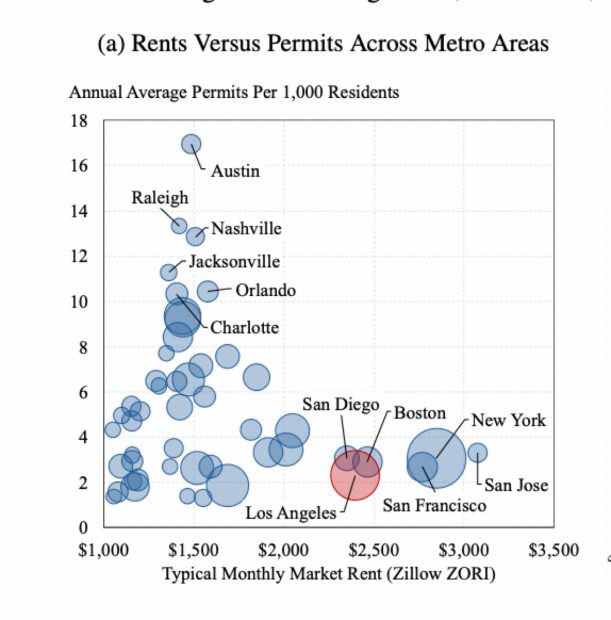
Permitting costs are widely cited, but little analyzed, as a key burden on housing development in leading U.S. cities. We measure them using an implicit market for “ready-to-issue” permits in Los Angeles, where landowners can prepay permitting costs and sell preapproved land to developers at a premium. Using a repeat-listing difference-in-differences estimator, we find developers pay 50 percent more ($48 per square foot) for preapproved land. Comparing similar proposed developments, preapproval raises the probability of completing construction within four years of site acquisition by 10 percentage points (30 percent). Permitting can explain one third of the gap in Los Angeles between home prices and construction costs. Keywords: building permit, land-use regulation, hedonic, zoning, capitalization. more.
We’re slowly losing one of the things that makes tennis genuinely great, surface diversity. This doesn’t show up in most audience analysis. In part because the creep of hard courts has been gradual, but also because it’s impossible to miss what you haven’t experienced. But there is an opportunity cost to having great players mostly ply their trade on one rather than three more evenly split surfaces, and an even greater cost to junior players optimising mostly for a hard court tour rather than a grass, clay, and hard court environment.
…The future of Substack is going to tilt toward writers with large audiences running completely unregulated pump-and-dump schemes through prediction markets. Buy low, tell your readers why X outcome is undervalued, sell high, pocket the difference. Not all Substack writers will make use of the Polymarket widget. But if you want the company to algorithmically promote your content, maybe you should try out this hot new gambling trend.
The cyberattack on Change Healthcare, first detected in February 2024, has grown into what appears to be the single largest exposure of personal health data in American history. UnitedHealth Group, the parent company of Change Healthcare, has estimated that approximately 190 million people were affected by the breach, a figure that dwarfs every prior federal data incident on record. The scale of the compromise, the simplicity of the initial intrusion, and the cascading disruption to medical billing and pharmacy systems across the country have forced a reckoning over how the nation’s largest health conglomerate secures the data of more than half the U.S. population.
The first is Audio Transcription in Notes. It records audio, transcribes it in real time, and summarizes the whole thing into key points. It’s built for meetings, lectures, interviews, and anything you want to capture and keep. The second is Live Captions. It transcribes any audio playing on your phone, or any sound happening around you, in real time. FaceTime calls, YouTube videos, podcasts, someone talking to you across a table. It works across every app on your phone and it doesn’t record anything. It just puts live subtitles on your screen.
LASIK eye surgery cost $2,200 per eye in 2000. Today it’s around $1,000 per eye despite 24 years of inflation. Meanwhile, an MRI that cost $1,200 in 2000 now costs $3,000+. The difference? LASIK operates in a free market with no insurance interference and minimal regulation.
New research shows that seasoned birders — including older adults — had denser tissue in parts of the brain tied to attention and perception.
But when his homegrown remote control app started talking to DJI’s servers, it wasn’t just one vacuum cleaner that replied. Roughly 7,000 of them, all around the world, began treating Azdoufal like their boss.
This article contends that the PE investment model imposes social costs in many portfolio companies through over-leverage, value extraction and short-term incentives. Part I shows how debt-driven acquisitions increase the probability of restructurings and job losses. Part II analyzes how profit pressure in PE portfolio companies can harm third parties including workers, healthcare patients, consumers, unsecured creditors, communities and the environment. Part III proposes limited, specific reforms—insurance and bonding requirements, minimum staffing and quality regulations, and increased disclosure requirements focused on sensitive industries and service sectors—that would require PE funds to internalize these foreseeable harms and provide federal and state regulators with the tools to identify and minimize related risks. This article concludes that these modest but targeted changes can preserve the benefits of the PE investment model while materially reducing externalized costs.
The Trump administration received at least 21 ideas to revitalize @Dulles_Airport. All would keep Saarinen’s iconic terminal but most would turn it into a ceremonial space with a new departures terminal elsewhere on airport grounds.
“South America has never offered me a deal good enough to seriously consider it. The Middle East has always been much better in terms of appearance fees. The European swing has also provided strong financial incentives. That makes a difference,” Tsitsipas, the former world No. 3, told CLAY.
Jane Street is also where SBF learned to trade before founding FTX and Alameda Research, and many of his future colleagues came from the firm or intersected with its networks. According to the lawsuit filed by Terraform’s bankruptcy administrator Todd Snyder, Pratt became the bridge between his former employer and his new one through a chat group that court filings describe as “Bryce’s Secret.”
The Gigacasting race isn’t just about tonnage. It’s about achieving the highest part reduction with the largest casting manufactured with the leanest process.
Pre-pandemic: ?,??? ????????? ??? ??? ??????? ??????. FY2025: ?,??? ????????? ??? ?? ??????? ??????. That’s 15% more staff serving half the customers. Per-employee comp is up 32%, from $140K to $171K. Any private company that lost half its customers and then grew headcount would be bankrupt. BART just asks for a tax increase.
Legacy platforms look very different. A typical mid-to-high-end vehicle still carries 70–120+ ECUs. The intelligent functions are spread across many specialized modules from multiple Tier-1 suppliers. Here is what changes when you drop in the Tesla box: Net effect: One Tesla box replaces the functional equivalent of 8–15 major ECUs or Tier-1 subsystems.
For the second year in a row, Trader Joe’s was the cheapest place to shop for groceries — this time by an even more significant margin. The same bag of items cost less than half as much as at Bi-Rite, this year’s priciest store. Independent grocers such as Mollie Stone’s, Luke’s Local and Gus’s Community Market all saw increases, though to varying degrees. We found nearly the exact same prices for most items at Safeway and Trader Joe’s as last year. Lucky was the only supermarket that saw decreases, though they were slight. (The Chronicle didn’t visit value-driven stores Grocery Outlet and Costco because of their inconsistent offerings, and omitted international grocery stores for the sake of direct comparison.)
The relevant bottleneck for humanoids is not “rare earths” in general, but the NdPr-to-magnet supply chain. China’s dominance in midstream processing and magnet manufacturing gives it leverage over the pace, cost curve, and industrial geography of embodied AI.
Massachusetts, long a bastion of progressive politics and high taxes, has quietly watched the equivalent of one-and-a-half Cambridges pack up and leave. A new analysis from the Pioneer Institute finds that more than 182,000 net domestic residents exited the commonwealth between April 2020 and July 2025, a sustained outflow that researchers describe as a lasting structural shift rather than a brief pandemic aftershock.
“If I recall, the timing between Apollo 7 and 8 was nine weeks,” the official said. “Launching SLS every three and a half years or so is not a recipe for success. Certainly, making each one of them a work of art with some major configuration change is also not helpful in the process, and we’re clearly seeing the results of it, right?”
If Big Tech organized as a class, they could do it effortlessly, at personal costs they would hardly notice — but it’s obvious to anyone with even passing familiarity with these people that they will never do anything like this. Elon Musk is by far the most radical and iconoclastic of the Silicon Valley billionaires, and he’s nowhere near this — which would, itself, be an embarrassingly petty exercise of political power by the standards of the wealthiest men in history. (Or even in comparison with the industrialists of the turn of the 20th century.)
Covey died in a cycling accident in 2013, at fifty. When Bezos wrote about her afterward, the word he chose was not talented or dedicated. He said she had “a deep keel.”
The @SFBART board should be held responsible for their unconscionable mismanagement of the transit system, spending like drunken sailors as ridership plummeted by half, adding $100 million in new staff alone for an emptying system. Now they’re playing the nihilism doomsday card.
And with it came a pernicious culture that religiously believed that words, be they diplomas or diplomatic cables, defined reality. Not actions. Or physics.
Best advice you can now give Danish entrepreneurs is to leave the country before anything gets off the ground. Danes better hope Novo never falters.
Still, the liberal interventionist—and Catholic—in me approves: commit the sin, ask for forgiveness later. More crudely stated: always kick ’em when they’re down, because God knows they’d do the same to you.
This is a drone cargo plane, designed for logistics and disaster response. It is the first unmanned aircraft for high-altitude, it can operate using very short runways, and is adaptable to either landing full of cargo, or dropping it by parachute to the ground. The capacity is one ton, with a range of over a thousand miles, with AI systems for loading and unloading in under five minutes.
The international order follows the law of the jungle much more than it follows international law. There are five major kinds of fights between countries: trade/economic wars, technology wars, capital wars, geopolitical wars, and military wars. Let’s begin by briefly defining them
Rummler/Obama covered up the prostitution scandal, and instead blamed the Secret Service: ten members lost their jobs over the scandal.
These developments do not represent isolated events but markers of an industry shifting toward broader participation, tighter regulatory scrutiny, and more strategic use of airspace management. The trajectory of drones in the next 12 to 24 months will be shaped as much by policy choices and manufacturing strategy as by technical innovation.
4 Charity suffereth long, and is kind; charity envieth not; charity vaunteth not itself, is not puffed up,
It also revealed the lack of talent on the Democratic team. You may have seen the clip of AOC trying to answer a question about U.S. support for Taiwan–a question that foreseeably is likely to come up, but about which she evidently has never spent a single moment thinking:
From below, hundreds of AI-native startups are entering every vertical. When building a credible financial data product required 200 engineers and $50M in data licensing, markets naturally consolidated to 3-4 players. When it requires 10 engineers and frontier model APIs, the market fragments violently. Competition goes from 3 to 300
Great quote from the owner… “There are towns across America that wish they were Music City — and we’re trying to be Las Vegas. Why?”. Absolutely terrible quote from the mayor. “ It’s not up to me whether he keeps that business open, the market evolves.”
(Yes, a human still decides which tools the agent is allowed to use. That’s a real marketing surface. But once the agent is running, the runtime purchasing decisions are pure optimization. The land grab is making it onto the allowlist, then being the best option once you’re there.)
This buy-then-convert pattern turned out to be surprisingly common. Using searches of Becker’s, CHOW, and hospital finance websites, I found 25 cases of for-profit hospitals getting acquired by nonprofits in the last decade. In over half those cases, the newly acquired hospital almost immediately (within a year) enrolled in the 340B Program. The remainder did not enroll because they were not 340B-eligible even after conversion (e.g., they did not meet eligibility criteria such as the DSH threshold). Here’s the full timeline of the acquisitions I found:
These findings suggest economic policies implemented in the 1970s had nothing to do with the Midwestern population declines that occurred after the 1970s. Rather, these data are consistent with a long-term and large-scale shift in preferences that began long before the 1970s, one that was not unique to the Midwest. It is foolhardy to center public policy around this false narrative, and, unsurprisingly, the administration’s attempts to reverse this trend have not only failed but have also economicallyhurtAmericans.
Companies report that they face a “reviewer lottery,” where critical questions hinge on the approach of a small number of individuals at FDA. Some FDA review teams are creative and forward-leaning, helping developers design programs and overcome obstacles to get needed products to patients, without cutting corners. FDA’s Oncology Center of Excellence (OCE), for example, is repeatedly identified as a model for providing predictable yet flexible options for bringing new drugs to cancer patients. OCE is now a dialogue-based regulatory paradigm that has facilitated efforts by academia, industry, the National Institutes of Health (NIH), and others to develop new cancer therapies and launch innovative programs and pilots like Project Orbis, RealTime Oncology Review.
He then goes on to list what he thinks is going to happen, for which the point summaries are:
• There will be more software than ever before • AI-enabled or AI-centric software is simply moving up the stack of what a product is • New tools will be created with AI that do new things • Domain experience will be wildly more important than it is today because every domain will become vastly more sophisticated than it is now • Finally, it is absolutely true that some companies will not make it.
The Circle Pines man worked for the Minnesota Department of Corrections until this past October. As wild as Brown’s story is, this is even wilder. Department of Corrections Commissioner Paul Schnell thanks the immigration authorities for their efforts. “If these federal allegations are accurate, this individual engaged in sophisticated efforts to misrepresent their identity, extending well beyond Minnesota,” Schnell said. “We are grateful to USCIS and ICE for their work in investigating and addressing immigration fraud.” Now that is wild.
But here’s what should keep software founders up at night: the line only moves in one direction. Every model generation pushes it higher. What’s above the line today will be below it in eighteen months. You can’t build a business on the assumption that your moat is permanent when the water level is rising on a schedule.
Business has never been better for lobbyists paid to push the agendas of foreign countries and companies, but critics say the surge undermines Trump’s ‘America First’ pledge.
“One third of the total package price, with the land, is in the regulatory costs,” one builder noted, including “your wetland fees, your park dedication fees, your permit costs,” and more. Thus, a house in Corcoran, Minnesota, that costs $182,000 to build will have an all-in cost of $372,000, including $56,000 in administrative costs alone! Throw in a modest profit margin, and you’re well out of “starter” range in the area. The same goes for estimates from Michigan and New Jersey.
The New York Post published their reporting three weeks before the end 2020 presidential election. Within 48 hours, 51 former intelligence officials signed a letter calling it likely Russian disinformation. They knew it was authenticated. They coordinated with the Biden’s Autopen campaign to sign it anyway. Twitter locked the New York Post’s account. Facebook suppressed the story. The corporate media called it a smear.
Chinese carmakers have lower cost structures, driven by tighter control over their supply chains and a stronger focus on the China market. This puts Western OEMs in a tough spot.
Putting data into glass is as simple as etching it (to be clear, this is technically not etching, which is a chemical modification of glass’ surface—here, lasers burn features into the interior of the glass). But that’s been one of the challenges, as the writing is typically a slow process. However, the development of femtosecond lasers—lasers that emit pulses that only last 10-15 seconds and can emit millions of them per second—can significantly cut down write times and allow etching to be focused on a very small area, increasing potential data density.
But there was something special about the original M5, launched in spring 1985, and it wasn’t only that it was the second car after the M1 to use the two-digit model code and get a proper WBS motorsport prefix on the VIN plate. Almost four decades later, there’s still something magical about the M5, and it remains the car that’s referenced as ground zero when it comes to super saloons.
David Reichel, executive director of the Sierra Avalanche Center, explained that the conditions became lethal as the massive storm delivered heavy snow on top of a base that had been transformed by an exceptionally dry January and start to February. The fresh snow, he said, fell on a “layer of snow that weakened and became unstable during the warm, dry weather.”
Drawing on OBFCM data from ~1 million vehicles (2021–2023), it reveals significant gaps: PHEVs emit 3–5 times more CO? than approved, with only ~25–30% electric driving due to frequent combustion-engine use even in battery-discharge modes. 2. Average real fuel consumption for PHEVs is 5.9 l/100 km, comparable to pure combustion-engine vehicles, undermining their climate benefits.
More Billing Codes See Skyrocketing Billing. T1019 is not the only billing code with explosive growth from 2018 to 2024, although it is the code with the highest amount paid out in that time. Twenty-two other codes saw anywhere from 200% to over 10,000% increases. Eight codes had over 500% more payments.
The old view: Everything is gray, no absolute right or wrong.
The new reality: Scripture provides clear guidance — God doesn’t leave us hanging.
Why it matters more now: As technology and human power to manipulate nature grow, objective morality (rooted in Scripture) becomes essential to stay grounded and good.
Result: Life feels better, clearer, more filled with light when aligned with unchanging truth.
I know that’s uncomfortable. Code review is sacred. It’s how you catch bugs, share knowledge, maintain standards. It’s also an identity thing. We’re engineers, and reviewing code is what engineers do. But clinging to the PR workflow in an agent-driven world isn’t rigor. It’s an identity crisis. Think about it. An agent generates 500 PRs a day. Your team can review maybe 10. The review queue backs up. This isn’t a bottleneck worth optimising. It’s a fake bottleneck, one that only exists because we’re forcing a human ritual onto a machine workflow.
The next morning, I rode back to the same crumbling building where I’d been polygraphed the day before. The examiner said, “Now that you’ve had a chance to think about it, is there anything you’d like to say?” He didn’t need to ask me twice. “You bet there is. I did my part, now I expect you to do yours.” It wasn’t until late that afternoon, when I was waiting for my plane at Dulles, that I realized, “Is there anything you’d like to say?” does not mean, “Please tell us all our faults.”
The concept behind sandboxing is fundamental to modern security: by restricting what an application can access, you minimize the potential damage from malicious code or unintended behavior. Think of it as putting an application in a secure room where it can only interact with specific objects you’ve placed there.
It’s already showing up in the numbers. Earlier this month, the FT reported that KPMG pressured its own auditor, Grant Thornton, to cut fees — arguing that AI should make the work cheaper. Grant Thornton agreed to a 14% reduction. When a Big Four firm is using AI as leverage to renegotiate its own audit fees, the repricing isn’t theoretical.
Looking around, and given that the high level idea is clear, there are a lot of smaller Claws starting to pop out. For example, on a quick skim NanoClaw looks really interesting in that the core engine is ~4000 lines of code (fits into both my head and that of AI agents, so it feels manageable, auditable, flexible, etc.) and runs everything in containers by default. […]