Secret Laws

Secret Hearings, trials without a defendant or defense attorneys? Right here, in the USA:

John Gilmore describes himself as “a civil libertarian millionaire eccentric.” He has recently garnered headlines because he refuses to show ID when boarding airplanes and is suing the Justice department and Southwest Airlines for not allowing him to travel in the U.S. without “showing papers.”
Some commentators, notably Hiawatha Bray at the Boston Globe don’t have much sympathy:
“The idea that we should be wasting our time arguing over whether it’s right to have to show ID before boarding a plane is too silly to deserve further discussion. I’m not trying to be rude; I just can’t take you [Todd Pinkerton] seriously, or Mr. Gilmore either.”
But Gilmore raised one deep concern in his foray against the Justice department: there appears to be a secret law that is being applied by the airlines, if not the TSA. What is the law? Who made it? How can I comply if I don’t know what it is? In a democracy that believes in the rule of law, this has got to be troubling.
t Gilmore raised one deep concern in his foray against the Justice department: there appears to be a secret law that is being applied by the airlines, if not the TSA. What is the law? Who made it? How can I comply if I don’t know what it is? In a democracy that believes in the rule of law, this has got to be troubling.
So, when the Ashcroft Justice Department demanded that the first hearing of the Gilmore case be held in secret, and that Gilmore and his attorneys be barred from it, things got even weirder, IMHO. This was beginning to sound like a proceeding from some totalitarian regime. The good news, in my opinion, is that the Court denied the DOJ motion.

Chris Gulker
Memo to Republican Senate contender Tim Michels (running against incumbent Democrat Russ Feingold): The Patriot Act argument will not carry the day…..
09/14/2004 Primary Results

Dane County has a useful site with results from yesterday’s primary here.
In an election related article, John Harwood discusses Colorado’s ballot initiative that would split the state’s electoral votes:

hile Colorado leans toward the Republicans, Democrats are hoping to grab some of the state’s nine electoral votes anyway, in a tactical strike that could lead to broader changes in America’s system of picking presidents.
Rick Ridder, a Denver-based political consultant who once managed Howard Dean’s campaign for the 2004 Democratic nomination, is pushing an initiative to amend the state’s constitution in the November general election and scrap the winner-take-all allocation of electoral votes practiced by 48 states. Instead, the state’s votes would be divided in proportion to the popular vote, which would almost certainly assure Massachusetts Sen. John Kerry of at least four of them (See related article).

Banks & State Taxes

Paul Gores:

Twenty-six banks have agreed to pay a total of $23 million in back taxes stemming from their use of Nevada tax shelters, and state tax officials said more settlements are imminent.
The back-tax total announced Monday was the first released by the Wisconsin Department of Revenue since it began a crackdown this year on the practice by many banks of shifting some of their income-earning assets, such as loans and bonds, to subsidiaries in Nevada.

This doesn’t seem like a whole lot of money given the size of the banks, perhaps it’s more of a PR deal.

Public Fiber Tough to Swallow?

John Gartner:

Across the United States, towns and cities dissatisfied with data services provided by the private sector are now delivering high-speed connectivity to the doorstep, often at lower prices.
In the process, however, municipalities are facing increasingly fierce opposition from cable operators and telecommunications companies unhappy with the competition. In some cases, cable companies and telcos are fighting to bar utilities entirely from providing broadband in the future.
Special Partner Promotion

Note that our current slow “broadband” providers are lagging the world in costs and speed. Much like roads, sewer and water, fiber networks should be a public good (transport only) while others provide services on those very fast networks.
John Perry Barlow comments on this. Robert Berger also has some useful notes vis a vis widespread free WiFi deployments. Doc Searls offers some useful notes on the “lame” broadband services available today.
Governments should be paying attention as their POTS (plain old telephone system) tax revenue will rapidly diminish over the next 5 years. Telephone calls have declined 50% since 1997.

Presidential Campaigns Visiting Madison

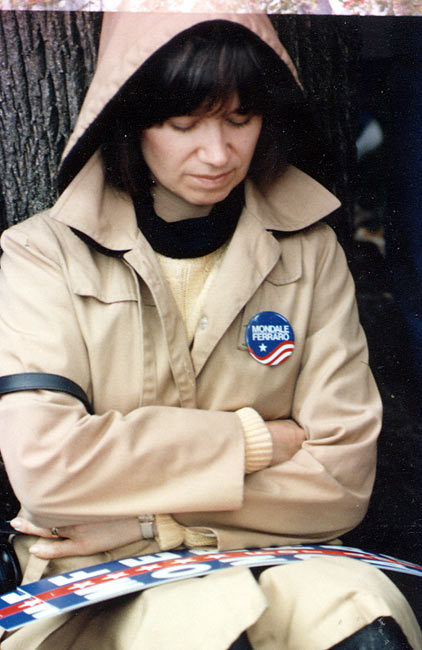
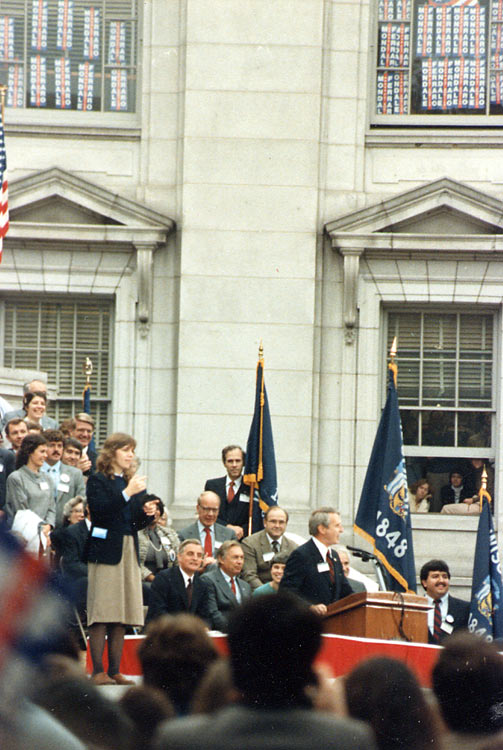
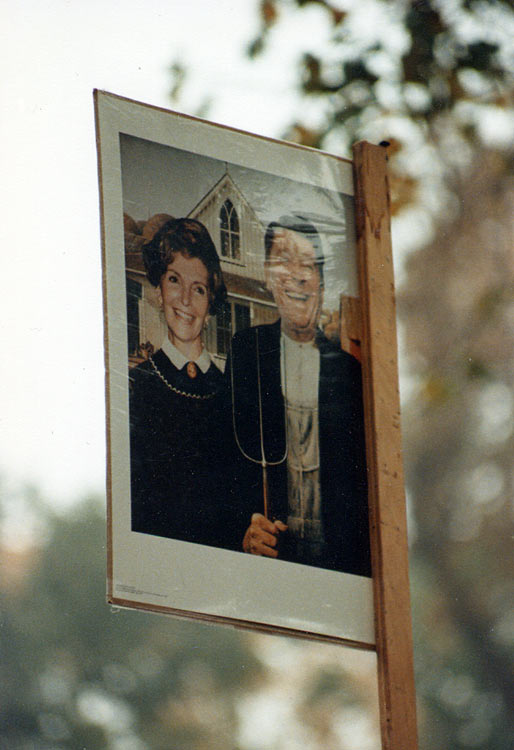
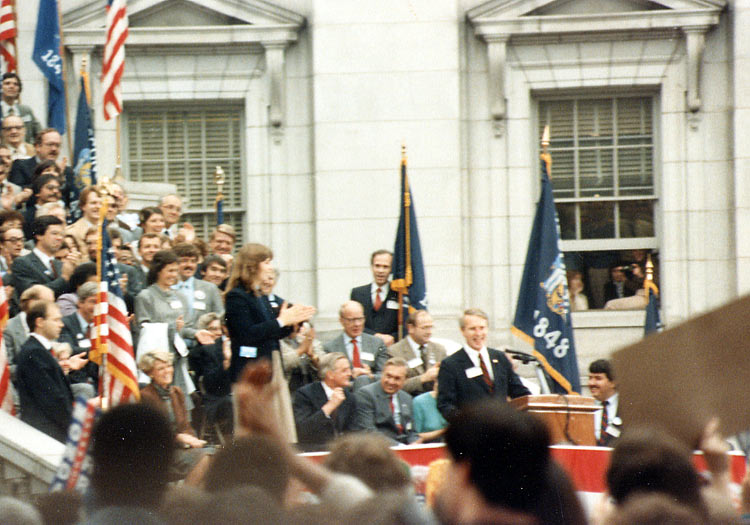
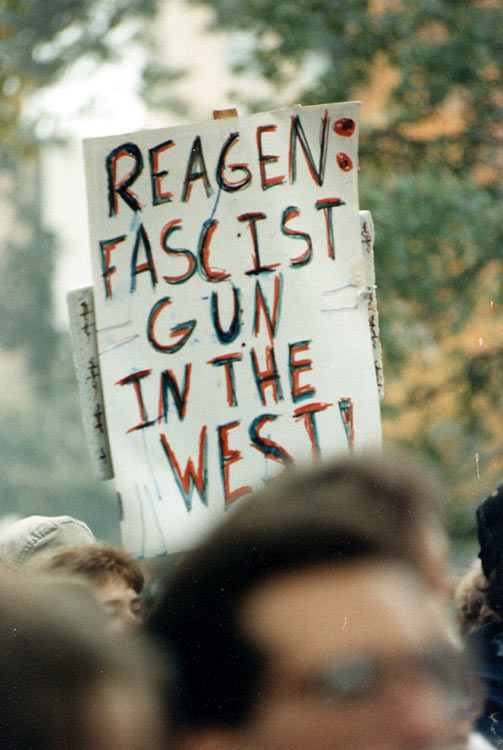
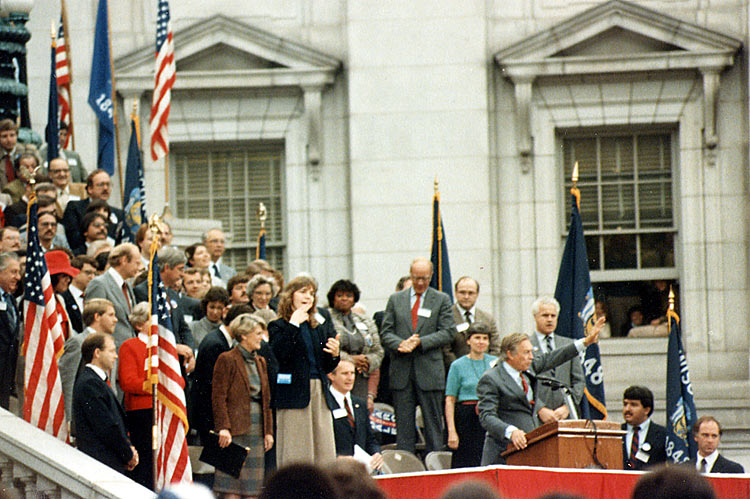
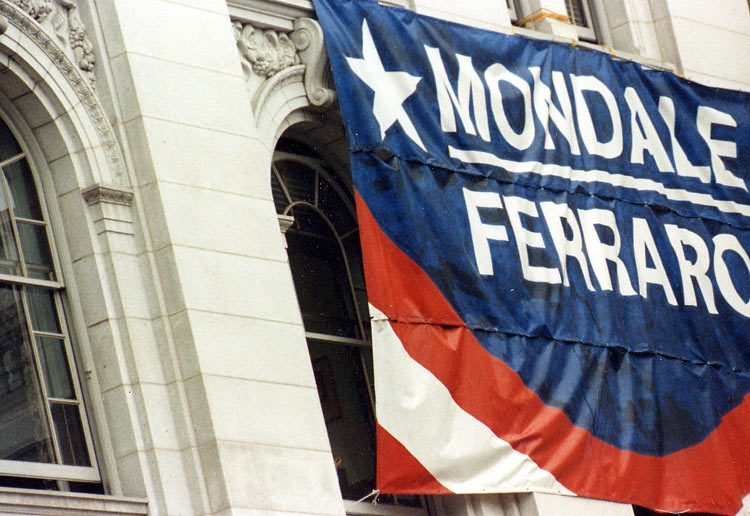
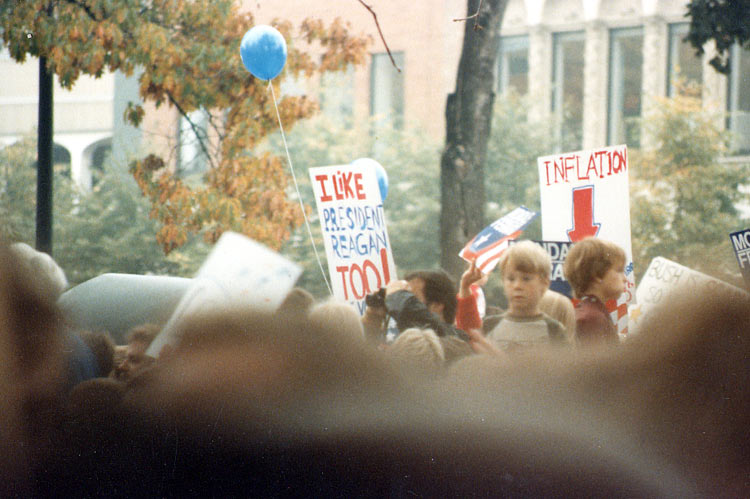
20 years ago, I along with some of my roommates attended a Mondale-Ferraro rally on the Capitol Square. I seem to recall that many attended simply to catch a glimpse of Walter Mondale’s daughter, Eleanor. I’ve scanned some photos from that date and posted them here:

This week’s campaign visits include:

Garcetti’s Disney Hall Photos


Book cover of ‘Iron: Erecting the Disney Concert Hall.’ Credit: Gil Garcetti
Former L.A. County District Attorney Gil Garcetti is known for his high-profile prosecutions of O.J. Simpson and the Menendez brothers.
But he left the district attorney’s office in 2000 and got out his cameras, turning a lifelong hobby — photography — into a second career. He talks with Scott Simon about his images of the ironworkers who built the Walt Disney Concert Hall in Los Angeles, designed by architect Frank Gehry.

Posted in Art.

Lean, Green Money Machine


Dale Buss explains how the Packers have thrived, despite their small market.

For the past two years, the Packers have ranked 10th out of the league’s 32 clubs in overall revenue, up 10 spots from 2001. After a $295 million expansion and renovation completed last year, Lambeau has become a lucrative year-round attraction. And the Packers’ cash kitty now exceeds $84 million, seemingly on the way to a $107 million goal that would give it a year’s operating costs in reserve.
The NFL’s financial structure, which distributes TV and licensing revenue evenly to all teams, has created a level playing field for the Packers. Fans snap up every ticket to home games, and the waiting list for a Lambeau Field season pass is still more than 63,000 names long for a 72,500-seat stadium. More than 105,000 Packer backers responded when the team sold nonvoting shares for $200 apiece in the late ’90s. “When we play on Sundays, the people in the stands aren’t just fans, but shareholders,” says Robert Harlan, a 33-year team executive who has been president since 1989.