Piracy and Kool Aid

Ed Treleven unfortunately passes along some Hollywood Kool Aid regarding file sharing in this article.
I don’t see any mention of our “fair use” rights in Treleven’s article. It’s clearly not right to copy thousands of copyright protected music files (read Janis Ian’s take and Courtney Love Does the Math for a counter argument), however, file sharing has many legitimate uses, significantly reducing the distribution costs of public domain and permissively shared art and speech, as well as reducing the centralized control of that distribution,” Judge Sidney R. Thomas in the recent Grokster case.
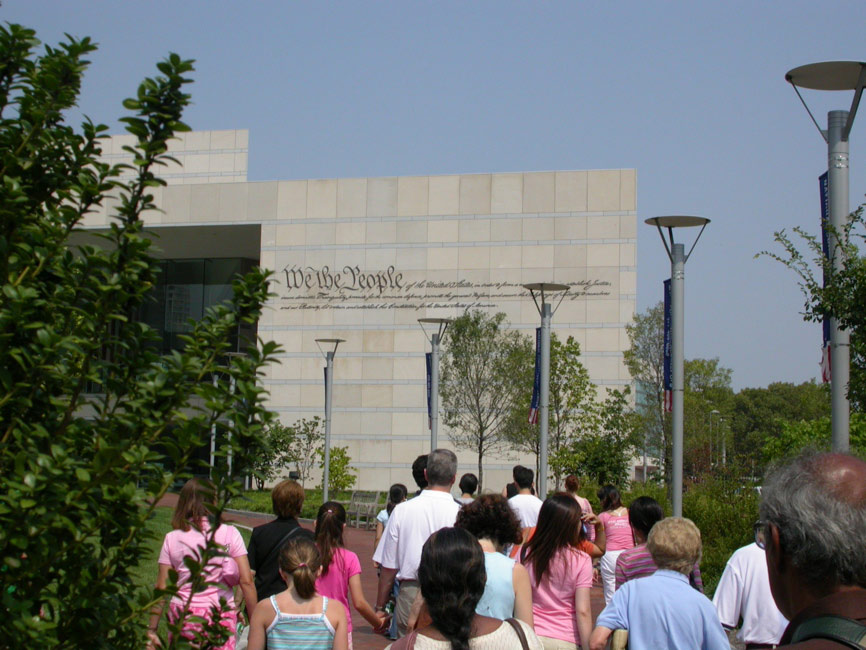
What’s next, no photos at the National Constitution Center due to “copyright”?
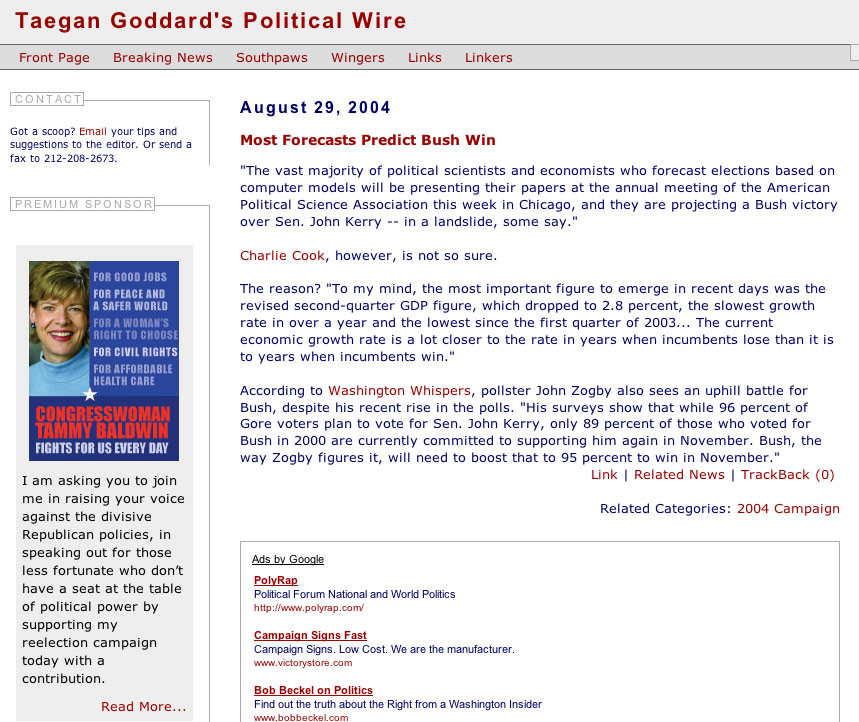
Actually, it’s worse than that. Democratic Senator Pat Leahy and Republic Orrin Hatch are carrying water for Hollywood by pushing the Induce Act.

Copyright Act (S.2560, Induce Act) would make it a crime to aid, abet, or induce copyright infringement. He want us all to think that the Induce Act is no big deal and that it only targets “the bad guys” while leaving “the good guys” alone. He says that it doesn’t change the law; it just clarifies it.
He’s wrong.
Right now, under the Supreme Court’s ruling in Sony v. Universal (the Betamax VCR case), devices like the iPod and CD burners are 100% legal — not because they aren’t sometimes used for infringement, but because they also have legitimate uses. The Court in Sony called these “substantial non-infringing uses.” This has been the rule in the technology sector for the last 20 years. Billions of dollars and thousands of jobs have depended on it. Industries have blossomed under it. But the Induce Act would end that era of innovation. Don’t let this happen on your watch – tell your Senators to fight the Induce Act!

Senator Herb Kohl sits on the Judiciary Committee, which held hearings on the Induce Act July 22, 2002.
I’ve not seen Kohl take a position on this, so I emailed his office on August 3 and received a reply on 8/30/2004. Contact Senator Kohl and tell him to vote against this Hollywood give away.
Wireless Internet for all? Philadelphia

David Caruso:

For about $10 million, city officials believe they can turn all 135 square miles of Philadelphia into the world’s largest wireless Internet hot spot.
The ambitious plan, now in the works, would involve placing hundreds, or maybe thousands of small transmitters around the city – probably atop lampposts. Each would be capable of communicating with the wireless networking cards that now come standard with many computers.
Once complete, the network would deliver broadband Internet almost anywhere radio waves can travel – including poor neighborhoods where high-speed Internet access is now rare.

Judy Newman says that Mayor Dave is in favor of it (count me as a skeptic on this one. The Madison airport, as of August, 2004 still does not have wireless internet, otherwise known as wi-fi. Most other airports have had it for years). True two way high speed internet access should be a public good, just like our roads and utilities. This is the economic issue for the state.

Old Media Empires Strike Back

Scott Woolley on Broadcast Bullies:

For decades the radio industry has crushed incipient competitors by wielding raw political muscle and arguments that are at once apocalyptic and apocryphal. Radio station owners, who formed the National Association of Broadcasters in 1923, have won laws and regulations that have banned, crippled or massively delayed every major new competitive technology since the first threat emerged in 1934: FM radio.

Speaking of Old Media Empires, J.D. Lasica interviews Jack ?I say to you that the VCR is to the American film producer and the American public as the Boston strangler is to the woman home alone.? Valenti

Eating away media’s credibility

Mary Schmich is spot on, as she eats away:

Should the media covering the Republican National Convention attend a million-dollar party thrown by the city of New York and TimeWarner in a spectacular shopping center in Columbus Circle?
Should we chow down on endless free food from some of New York’s priciest restaurants?
Should we gobble up the free Republican National Committee Media Welcome gift booklet–the one that gives us discounts at Borders, Bose and Tumi, and complimentary espresso in the cigar lounge at Davidoff and a free traditional shave with shaving cream purchase at the Art of Shaving?
Should we accept freebies that on ordinary days we would understand were as forbidden as plagiarism?
Should we do this even though we report mockingly on the luxury partying of the political parties?
Should we shrug off our own conspicuous consumption, paid for by someone else, as part of doing business?
Well, it doesn’t matter what you think. It’s done.
Thousands of media types, swirling free martinis and chattering up a cyclone, swarmed through the shops of the towering new TimeWarner Center Saturday night.
Oh, look, there’s Wolf Blitzer. And some CEO of something. And that woman–isn’t she somebody?

This seems to be related (via instapundit)

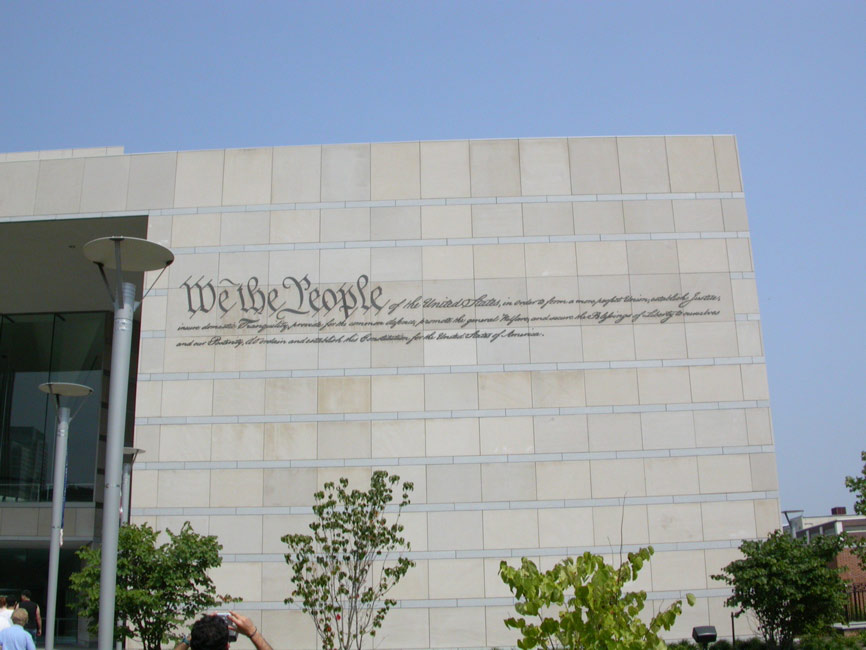
National Constitution Center: Photos Verboten!

Words fail me, today.
I took a number of photos during a visit to Philadelphia’s generally well done National Constitution Center. Four times, I was told that neither photos, nor videos are allowed. I asked how it was that the National Constitution Center would prohibit photos or videos. A manager was called and told me that:

Some of the materials are copywritten and that flash photography could be harmful to documents. I agreed that most people don’t know how to turn off their flash when shooting in AUTO mode, but I’ve visited many, many places where photography is permitted without a flash (including the Philadelphia Museum of Art).

My better half, Nancy whispered to me that today was not really the day to get “thrown out of the National Constitution Center”. Perhaps I should not be so surprised, when I read things like this.

Entrance
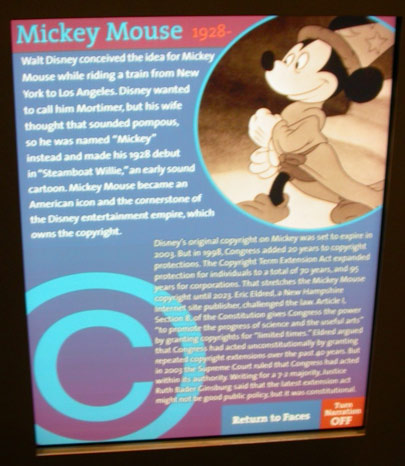
Eldred case & Mickey
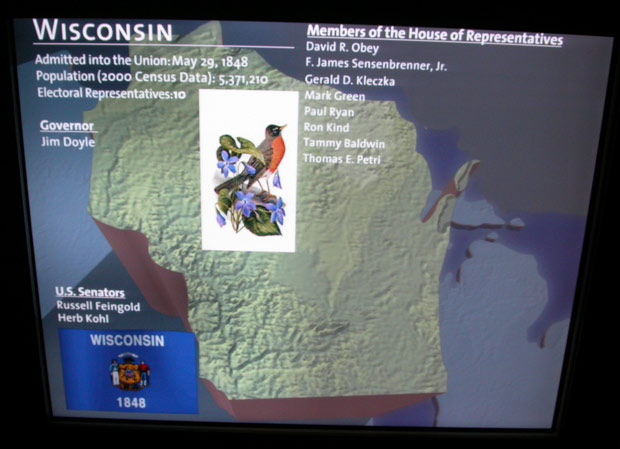
WI Representatives
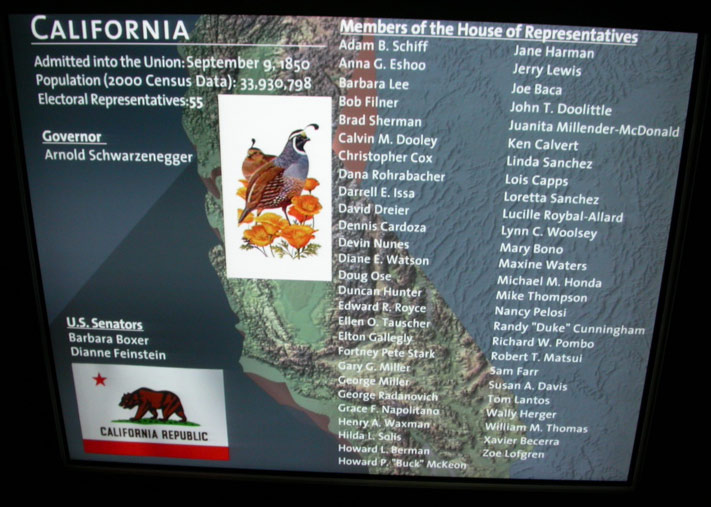
CA Representatives
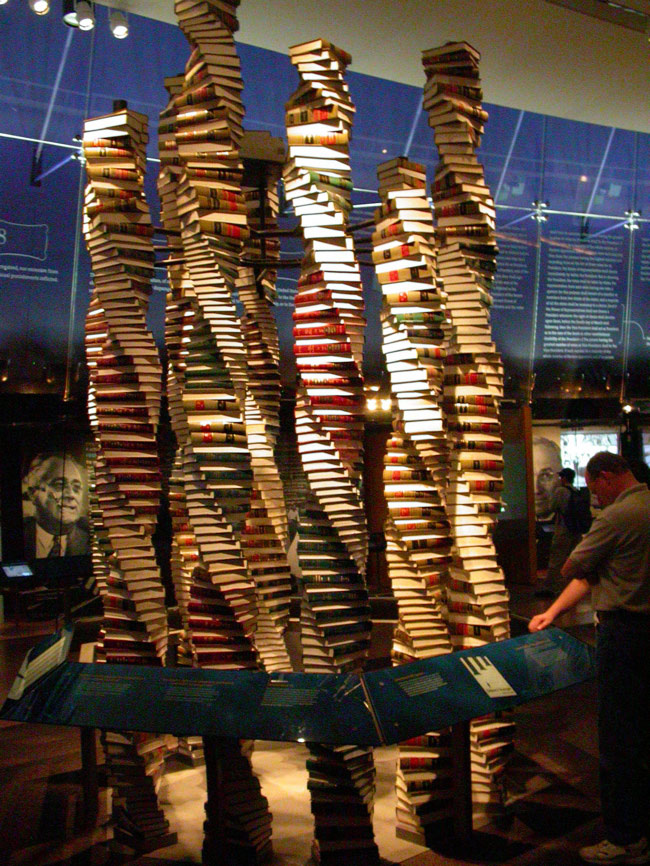
Legal Books
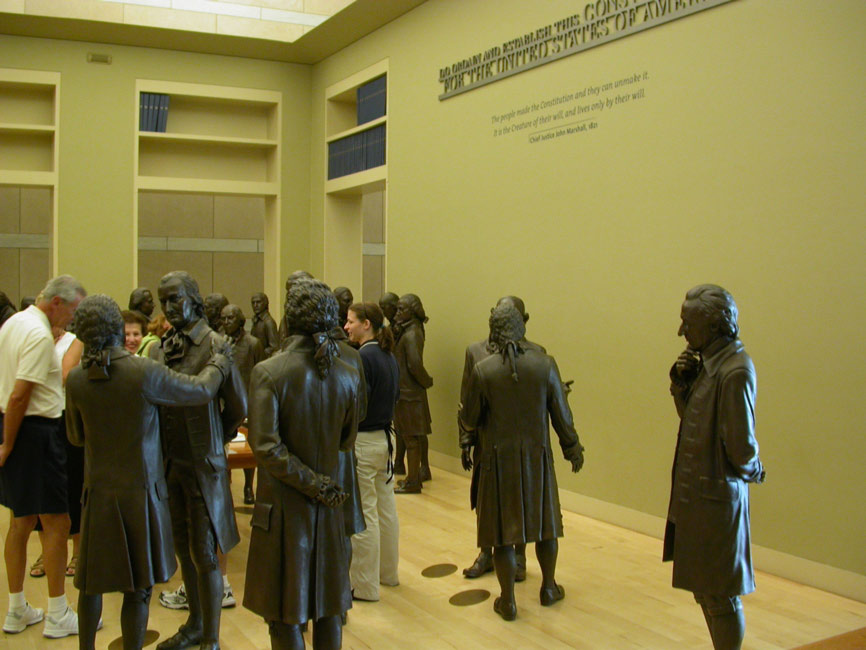
Founding Fathers
Entrance
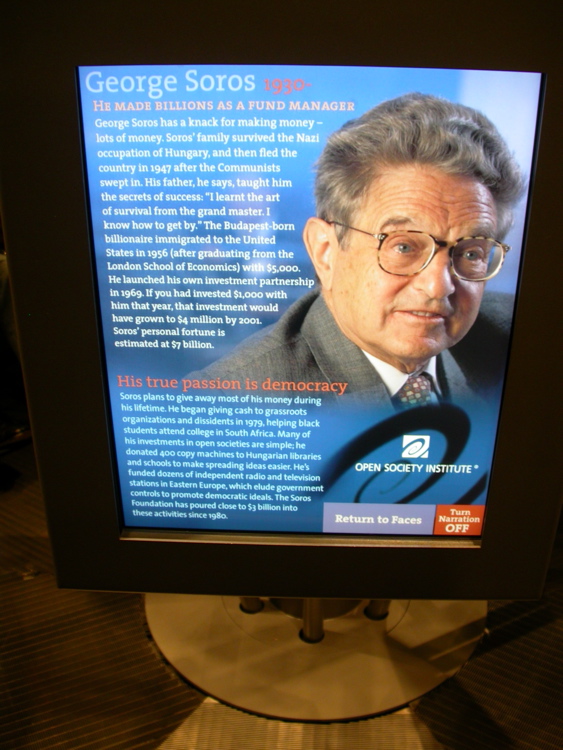
George Soros
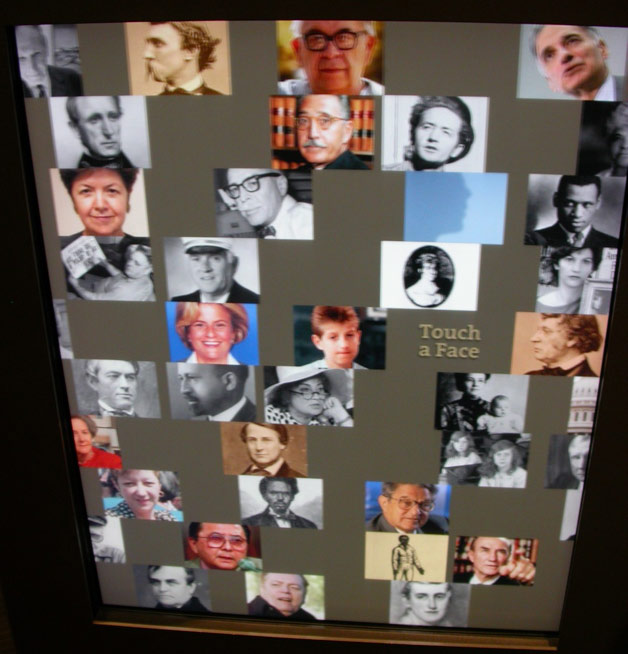
Touch Screen
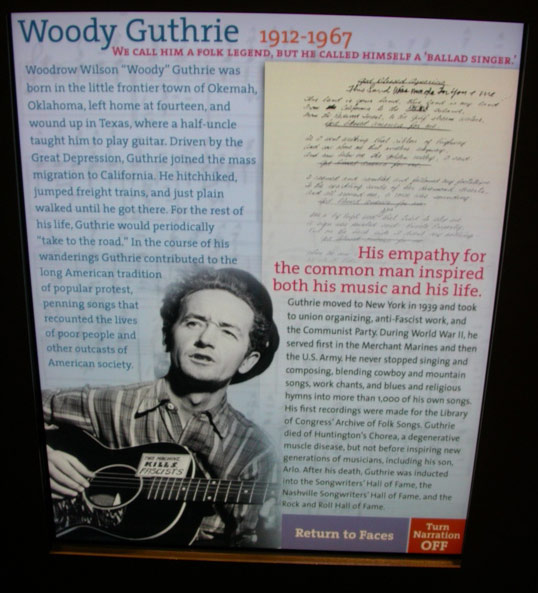
Woody Guthrie
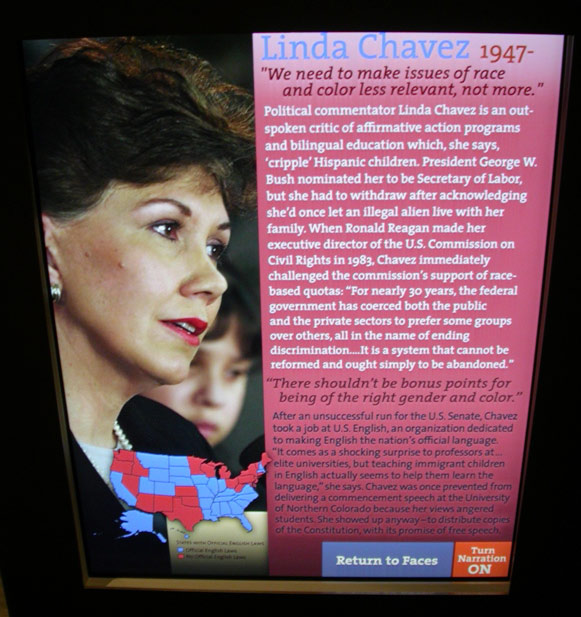
Linda Chavez
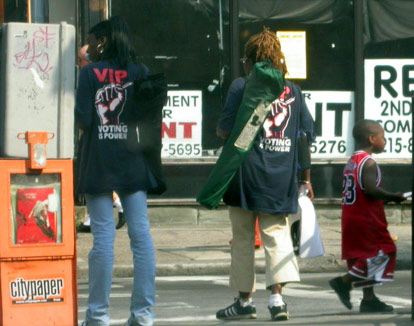
Voting is Power

There’s also this: [pre-emptive interrogations – shades of Minority Report]

Election-Year Ties in Afghanistan, Pakistan and the U.S.

India, Afghanistan and the United States are just three of the nations holding general elections in 2004. Though far flung on the map, electoral decisions in one of these countries will reverberate in the others, argues Steve Coll. In a three-part series of essays for NPR, Coll reflects on the political links between America, Afghanistan and Pakistan — and the shadow that Osama bin Laden and his al Qaeda terror network cast over the approaching fall election season.
Coll is the author of Ghost Wars, a must read for anyone interested in US South Asia policies.