Satellite Radio Answers the Question

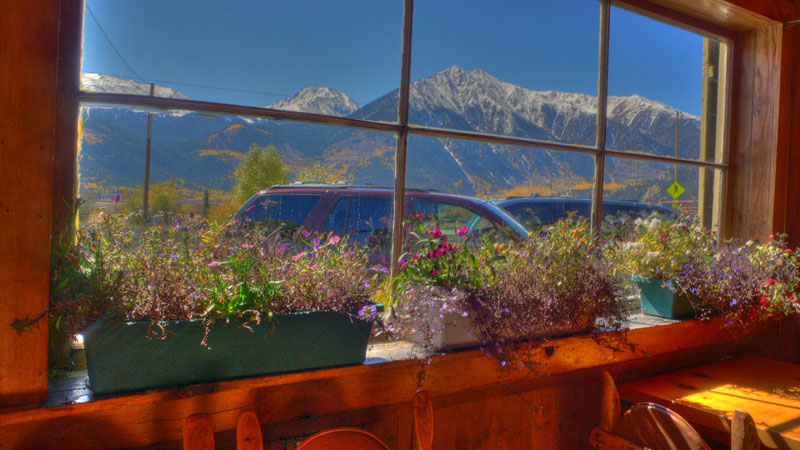
i’ve not thought much about satellite radio (XM, Sirius) until a recent lengthy drive around central Colorado. Prior to satellite radio, if you wanted music while driving, the choices were:

  • an iPod with an fm adaptor, or a cable plugged into the rental car’s radio, or
  • Local radio

Hertz, perhaps via a Sirius promotion, included their service in my rental car. I was pleasantly surprised with the depth and breadth of music available (though Lefsetz says that XM is superior in this respect – and in reception quality).

Several of Sirius’s songs were a pleasant surprise: Elton John’s classic “Funeral for a Friend” and Willie Nelson’s acoustic “Crazy“, among others.

There were some disappointments, including replays (Coldplay) and the odd playing of the “Fray” in Sirius’s “Coffeehouse” program. I have to assume that they are paid to plug the Fray.

I was pleasantly surprised with the Sirius reception while driving in Canyons. The only places we lost reception were I-70’s Eisenhower Tunnel and in some deep canyons.

The satellite choices certainly are compelling, particularly given the same old, same old, played over and over on traditional stations.

Finally, I continue to be amazed at the quantity of 30 and 40 year old music played in restaurants, cafe’s and bars. Lunching on trout tacos one day, we heard Joan Baez, Steve Miller, The Who, the Rolling Stones and Led Zeppelin among many others. Is there nothing interesting from the 21st Century?
Milwaukee Passenger Detained over “idiot” barb

IAG:

A Wisconsin man who wrote “Kip Hawley is an Idiot” on a plastic bag containing toiletries said he was detained at an airport security checkpoint for about 25 minutes before authorities concluded the statement was not a threat.

Ryan Bird, 31, said he wrote the comment about Hawley — head of the Transportation Security Administration — as a political statement. He said he feels the TSA is imposing unreasonable rules on passengers while ignoring bigger threats.

Nice Article on Barneveld’s Botham Winery

Doris Hajewski:

When Peter and Sarah Botham recently installed a new 3,200-gallon tank at their rural winery, they stepped back, looked at it and realized that it holds more wine than was made in the first year of the business.


“It’s hard to keep up,” said Peter, as he forked grapes into a device that separates the fruit from the vines. “I’m really thrilled about the potential, but it’s a little scary.”

He was talking about a new agreement the couple signed with Badger Liquor Co., a large distributor that will put Botham wines into stores around the state soon, including the Copps and Pick ‘n Save supermarkets.”It’s hard to keep up,” said Peter, as he forked grapes into a device that separates the fruit from the vines. “I’m really thrilled about the potential, but it’s a little scary.”

He was talking about a new agreement the couple signed with Badger Liquor Co., a large distributor that will put Botham wines into stores around the state soon, including the Copps and Pick ‘n Save supermarkets.

How Useful Are Oil Projections?

Edward Tufte:

n 1974 the Federal Energy Administration asked 4 statisticians to provide independent estimates of the amount of oil still underground. The four groups worked completely independently; I found out the names of the other three groups long after the reports were filed. The results, as I recall, were one very low forecast, one very high forecast, and two skeptical reports (including mine) in effect saying the error bound around the forecasts covered all reasonable policy alternatives. Thus the collective result confirmed the views of the two skeptical reports!

Here is my analysis. Perhaps this should have appeared as a short case study in Beautiful Evidence, but the idea never occurred to me.

What about now, 31 years later? My skepticism about resource forecasts might be confirmed or might not by a fresh analysis, which would reveal what a fresh analysis of the evidence would reveal. In policy relevant studies of evidence, there is too often a rage to conclude.

GM Janesville Plant History

GM’s FYI Blog:

GM’s Janesville, Wisc., Assembly plant has produced more than half a million trucks capable of running on corn-based E-85 ethanol. But back in 1919, farmers counted on the Janesville plant for another reason: Samson Model M tractors.

The Model M cost $445 and used a four-cylinder Northway engine with a disc-type clutch. Moving parts were enclosed and self-oiling, making them low maintenance. The Model M was advertised to be so simple that the toolbox only contained three wrenches.

Chicago’s Wireless RFP

Esme Vos:

Chicago has finally released its RFP for a citywide Wi-Fi network. In May 2006, Mayor Richard M Daley had announced a plan to provide affordable broadband Internet service to all Chicagoans and to make computers more widely available to low-income residents. The Mayor also offered $250,000 in grants to help community groups come up with innovative ways to help close the digital divide, and he appointed an advisory panel to make further recommendations on the issue.

The City of Chicago’s Department of Business and Information Services (BIS) introduced a Draft RFP for comments on May 30, 2006. The City received many meaningful comments and suggestions, which are incorporated in the Final RFP, which it issued today.

Full RFP [pdf]

“Emergence of Citizen’s Media”

Interesting. A forum addressing “citizens’ media” populated with no one actually practicing it.

Sort of like the big steel mill folks ruminating over the mini mills that over time dominated the industry.

A mini-mill is traditionally a secondary steel producer; however, Nucor (one of the world’s largest steel producers) uses mini-mills exclusively. Usually it obtains most of its iron from scrap steel, recycled from used automobiles and equipment or byproducts of manufacturing. Direct reduced iron (DRI) is sometimes used with scrap, to help maintain desired chemistry of the steel, though usually DRI is too expensive to use as the primary raw steelmaking material. A typical mini-mill will have an electric arc furnace for scrap melting, a ladle furnace or vacuum furnace for precision control of chemistry, a strip or billet continuous caster for converting molten steel to solid form, a reheat furnace and a rolling mill.

Originally the mini-mill concept was adapted to production of bar products only, such as concrete reinforcing bar, flats, angles, channels, pipe, and light rails. Since the late 1980s, successful introduction of the direct strip casting process has made mini-mill production of strip feasible. Often a mini-mill will be constructed in an area with no other steel production, to take advantage of local resources and lower-cost labour. Mini-mill plants may specialize, for example, making coils of rod for wire-drawing use, or pipe, or in special sections for transportation and agriculture.