
“Whoa” Video of Space Ship One’s 40 second burn to mach 2 & 105,000 feet [Windows Media] from gulker.com
Learn more by visiting www.xprize.org
Madison Property Taxes: “Everybody’s Richer”

According to city assessor Ray Fisher Friday when 2004 property assessments were released. “My house went up 10 percent this year. I look at it as money in my pocket.” – Beth Williams writes. Interesting perspective…. Can’t say that I agree with Ray on that one. Bill Novak writes:
“Last year, assessments went up 8.6 percent and the local real estate tax was up 7.1 percent, according to the Assessor’s Office. In 2002, assessments were up 8.1 percent and taxes went up 3.2 percent. In 1997 and 1999, assessments went up and taxes went down.” What about 1998, 2000 and 2001?
There has been talk in the state legislature of completely shifting school taxes from the property tax to other sources, such as the sales tax. Wayne Wood, a retiring representative from Janesville and Rep Mickey Lehman (R-Hartford) developed a proposal that would have used a sales tax increase to reduce property taxes for schools.
Educators Flocking to Finland, Land of Literate Children

Imagine an educational system where children do not start school until they are 7, where spending is a paltry $5,000 a year per student, where there are no gifted programs and class sizes often approach 30. A prescription for failure, no doubt, in the eyes of many experts, but in this case a description of Finnish schools, which were recently ranked the world’s best.
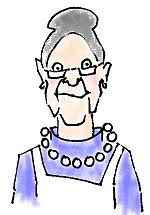
Budget Deficit: “throw Granny off welfare” and “buy your own drugs”
 |
 |
A teacher recently gave her students the assignment of balancing the federal budget using this simulation. Some of the results are instructive. From Marginal Revolution…
Antidepressant Use Questioned
“Pediatricians and family physicians should not prescribe antidepressants for depressed children and adolescents because the drugs barely work and their side effects are often significant, Australian researchers have concluded”, Gardiner Harris writes.
Rice Testimony Quicktime VR Scene
Chris Ramirez shot a very nice Quicktime VR scene of Condoleeza Rice’s testimony yesterday in Washington, DC. (VR scenes with lots of people are quite challenging). Very Nice
Learning to Expect the Unexpected

Former Wall Street bond trader and author of the quite useful book Fooled by Randomness pens an op-ed piece in today’s New York Times where he describes black swans (an outlier, an event that lies beyond the realm of normal expectations) with respect to 9/11 and the current investigation:
Most people expect all swans to be white because that’s what their experience tells them; a black swan is by definition a surprise. Nevertheless, people tend to concoct explanations for them after the fact, which makes them appear more predictable, and less random, than they are. Our minds are designed to retain, for efficient storage, past information that fits into a compressed narrative. This distortion, called the hindsight bias, prevents us from adequately learning from the past.
Black swans can have extreme effects: just a few explain almost everything, from the success of some ideas and religions to events in our personal lives. Moreover, their influence seems to have grown in the 20th century, while ordinary events ? the ones we study and discuss and learn about in history or from the news ? are becoming increasingly inconsequential.
Consider: How would an understanding of the world on June 27, 1914, have helped anyone guess what was to happen next? The rise of Hitler, the demise of the Soviet bloc, the spread of Islamic fundamentalism, the Internet bubble: not only were these events unpredictable, but anyone who correctly forecast any of them would have been deemed a lunatic (indeed, some were). This accusation of lunacy would have also applied to a correct prediction of the events of 9/11 ? a black swan of the vicious variety.
Fall Wisconsin Senate Race Poll

Incumbent Senator Russ Feingold is supported by 51% of Wisconsin residents in an early poll, according to Graeme Zielinski
By 51% to 29%, residents polled in March said they would like to see Feingold re-elected for his third term, with the remainder not answering the question or saying they didn’t know.
In a separate question, 47% said they had a favorable impression of Feingold, while 19% said their view was unfavorable, figures that have stayed relatively constant since fall. About a third said they didn’t know enough to have formed an impression.
Meanwhile, Feingold’s Republican rivals remained largely unknown, with neither state Sen. Bob Welch (R-Redgranite), construction executive Tim Michels or car dealer Russ Darrow registering with more than one in five residents.
Voters, Demographics & Data Mining

Ever wonder how the politicians determine who to call, mail or why they might knock on your door?
These articles on data mining with voter information, local demographics & door to door politics tell the story:
- Data Churners Try to Pinpoint Voters’ Politics
- Grass roots, door to door politics is back. I believe this is a cause/effect of declining tv & newspapers users.
- Landslide counties: Tim Noah on geographic political segregation
Wal-Mart Supercenter Turned Down – in Southern California

Sara Lin & Monte Morin write about a familiar topic – local opposition to Wal-Mart Supercenters:
A bid by the world’s largest corporation to bypass uncooperative elected officials and take its aggressive expansion plans to voters failed Tuesday, as Inglewood residents overwhelmingly rejected Wal-Mart’s proposal to build a colossal retail and grocery center without an environmental review or public hearings.
With all votes counted Tuesday evening, 4,575 Inglewood residents had voted in favor of Wal-Mart’s plan, while 7,049 had voted against it