Most combines traveling across fields in the Midwest this fall had a GPS receiver located in the front of the cab. Although agriculture has been experimenting with this technology for a decade or so, only now is the industry starting to consider all the uses of this transformative technology. For several years, farmers have had the ability to map yields with global positioning data. Using that information, firms can design “prescriptions” for the farmer, who uses the “scrips” to apply seed and fertilizer in varying amounts across the field. Where the yield maps show soil with a lower yield potential, the prescription calls for fewer seeds and less fertilizer. This use of an individual farmer’s data to design a different program for each square meter in a field spanning hundreds of acres could replace a farmer’s decades of experience with satellites and algorithms. What we have gained in efficiency and by avoiding the overuse of scarce and potentially environmentally damaging inputs, we may be losing in the connections of the farm family to the ancestral place. Precision technology will allow managers to cover more acres more accurately and will likely lead to increasing size and consolidation of farms. While Michael Pollan, Mark Bittman, and Alice Waters continue to argue that we need to turn back the clock on technology in agriculture, much of the world is moving in a quite different direction.
Advice for individual fields is only the beginning of the uses for this technology. The leading agricultural equipment firm, John Deere, is running a pilot program this fall with 500 farms and 1,000 combines across the Midwest. Data is uploaded every several hours to the cloud, where it can be used… well, we don’t really know all the ways it can be used. If 1,000 machines randomly spread across the Corn Belt were recording yield data on the second day of harvest, that information would be extremely valuable to traders dealing in agricultural futures. Traders have traditionally relied on private surveys and Department of Agriculture yield data (the latter delayed by a month this year because of the government shutdown). These yield estimates are neither timely nor necessarily accurate. But now, real-time yield data is available to whoever controls those databases. The company involved says it will never share the data. Farmers may want access to that data, however, and they may not be averse to selling the information to the XYZ hedge fund either, if the price is right — but that’s only possible if farmers retain ownership of the data.
Author: Jim Zellmer
Cars Kill Cities
Cars do not belong in cities. A standard American sedan can comfortably hold 4+ adults w/ luggage, can travel in excess of 100 miles per hour, and can travel 300+ miles at a time without stopping to refuel. These are all great things if you are traveling long distances between cities. If you are going by yourself to pickup your dry cleaning, then cars are insanely over-engineered for the task. It’s like hammering in a nail with a diesel-powered pile driver. To achieve all these feats (high capacity, high speed, and long range driving), cars must be large and powered by fossil fuels. So when you get a few hundred (or thousand) cars squeezed onto narrow city streets, you are left with snarled traffic and stifling smog.
Even if you ignore the pollution, cars simply take up too much space. Next time you are stuck in traffic behind what seems like a million cars, try to imagine if all those cars where replaced by pedestrians or bike riders. Suddenly, the congestion is gone.
Computer-Controlled Anesthesia Could Be Safer for Patients
By tracking brain activity through electroencephalography, or EEG, software may be able to maintain a patient in a medically induced coma more safely than a human expert can.
Anesthesiologists use EEG to monitor a patient’s level of sedation through sensors placed on the scalp. When a patient is deeply sedated in a medical coma—a technique sometimes used to reduce brain swelling after a traumatic injury or to treat uncontrolled seizures—a nurse or doctor must currently monitor the patient’s brain activity and adjust the rate of anesthetic delivery around the clock, sometimes for days.
Emery Brown, an MIT neuroscientist and an anesthesiologist at Massachusetts General Hospital, thinks the computer-controlled anesthetic system he has developed could do a better job. In a study published on Thursday in PLoS Computational Biology, Brown and colleagues demonstrate the technology in rats as a step toward developing it for human patients.
Map Showing Fall in Car Ownership Across London
Flip Chart Rick, via Leigh Turner.
The Gen Y revolution that may never come
It is always irritating to be stereotyped, but it must be particularly galling for cash-strapped, educated members of “Generation Y” to be told by demographers, marketers and futurologists that they have to get out and shake up management and the world of work.
Globally, under-30s may be “irreverent, change-seeking, challenging, better informed, mobile, and connected”, as Moisés Naím describes them in his new book, The End of Power. But the FT’s “Class of the Crunch” series has underlined that, in Britain at least, recent graduates are paying more for education and housing and earning less than their predecessors. Changing the world of work is the last thing on most of their minds: they have to get into it first.
Once there, new recruits find the reality of long hours at lean organisations that make few concessions to inexperience a shock, after years of cosseting by their baby boomer parents. London Business School’s Lynda Gratton details the challenges ahead in her book The Shift. She reprimanded an audience of older executives at the recent FT Innovate conference for giving young employees such “crap-awful work”.
Big Automakers Won’t Build the Car of the Future, Small Inventors Will
Why do major leaps forward come so rarely in the auto industry? There are of course the usual suspects: crash test standards, National Highway Traffic Safety Administration requirements, European pedestrian safety protections; entrenched capital investment in infrastructure and manufacturing methods; long vehicle development cycles — the whole legacy kaboodle of a mature and highly regulated industry. But I spent four years researching, interviewing, and writing about inventors who aren’t limited to thinking like the auto companies, and who made cars that are drastic departures from the ones we’re driving now. They did this as part of a grand-challenges approach to innovation — a $10 million X Prize that pushed inventors to build the super-efficient car of the future.
Auto companies like to sneer at legitimately futuristic cars, calling them “science projects” and saying consumers will never buy them. I believe this is a mistake. Because ultimately, they don’t really know. They’ve never tried to make and sell cars like the ones that ended up excelling in the X Prize contest. And they’re awfully good at blaming consumer timidity for their own engineering fears and failures.
Announced in 2007 and staged in 2010, the Progressive Insurance Auto X Prize attracted diverse interest — not from big automakers but from lone inventors, garage hackers, students, entrepreneurs, and startup companies all over the world, all with different ideas about how to shape the future of the automobile. To win a piece of the $10 million prize pot, teams had to build a safe, practical car that could travel 100 miles on the energy equivalent of a gallon of gas (MPGe) and emit 200 grams per mile or less of CO2 (a greenhouse gas that contributes to global warming).
Arguments Fly During FTC Workshop on Native Advertising
The workshop, called “Blurred Lines: Advertising or Content,” focused on whether publishers and advertisers are doing enough to keep consumers from mistaking native ads — which are meant to closely resemble non-sponsored content — from the content itself.
“As consumers, we started seeing, when we went online, things we that weren’t sure what they were,” said Mary Engle, the FTC’s associate director for advertising practices, in reference to native ads’ resemblance to editorial content. Concerns about deception, she said, sparked the FTC’s interest.
Trying to make money
Fearful the federal government would meddle with the hottest new form of advertising, leaders from across the spectrum came together in its defense. Executives from Procter & Gamble, Hearst, Mashable,The Huffington Post, Outbrain, Sharethrough and more participated in the standing-room only workshop that ran all day. Over the course of it, every imaginable defense of the medium surfaced, from the standard “native advertising is transparent enough” argument to a claim that consumers want more native ads.
Reverse-Engineering a Genius (Has a Vermeer Mystery Been Solved?)
David Hockney and others have speculated—controversially—that a camera obscura could have helped the Dutch painter Vermeer achieve his photo-realistic effects in the 1600s. But no one understood exactly how such a device might actually have been used to paint masterpieces. An inventor in Texas—the subject of a new documentary by the magicians Penn & Teller—may have solved the riddle.
In the history of art, Johannes Vermeer is almost as mysterious and unfathomable as Shakespeare in literature, like a character in a novel. Accepted into his local Dutch painters’ guild in 1653, at age 21, with no recorded training as an apprentice, he promptly begins painting masterful, singular, uncannily realistic pictures of light-filled rooms and ethereal young women. After his death, at 43, he and his minuscule oeuvre slip into obscurity for two centuries. Then, just as photography is making highly realistic painting seem pointless, the photorealistic “Sphinx of Delft” is rediscovered and his pictures are suddenly deemed valuable. By the time of the first big American show of Vermeer paintings—at the Metropolitan Museum of Art, in 1909—their value has increased another hundred times, by the 1920s ten times that.
Despite occasional speculation over the years that an optical device somehow enabled Vermeer to paint his pictures, the art-history establishment has remained adamant in its romantic conviction: maybe he was inspired somehow by lens-projected images, but his only exceptional tool for making art was his astounding eye, his otherworldly genius.
So Close, Yet So Far Out
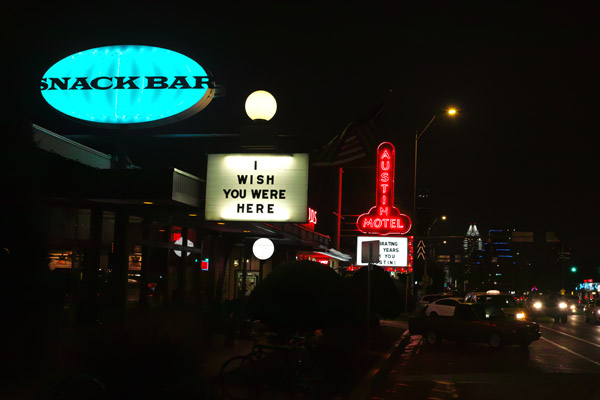
Travel is a blessing, particularly walking around when a few free minutes appear. Happy Thanksgiving.
Has The Self Driving Car Arrived?
Human beings make terrible drivers. They talk on the phone and run red lights, signal to the left and turn to the right. They drink too much beer and plow into trees or veer into traffic as they swat at their kids. They have blind spots, leg cramps, seizures, and heart attacks. They rubberneck, hotdog, and take pity on turtles, cause fender benders, pileups, and head-on collisions. They nod off at the wheel, wrestle with maps, fiddle with knobs, have marital spats, take the curve too late, take the curve too hard, spill coffee in their laps, and flip over their cars. Of the ten million accidents that Americans are in every year, nine and a half million are their own damn fault.
A case in point: The driver in the lane to my right. He’s twisted halfway around in his seat, taking a picture of the Lexus that I’m riding in with an engineer named Anthony Levandowski. Both cars are heading south on Highway 880 in Oakland, going more than seventy miles an hour, yet the man takes his time. He holds his phone up to the window with both hands until the car is framed just so. Then he snaps the picture, checks it onscreen, and taps out a lengthy text message with his thumbs. By the time he puts his hands back on the wheel and glances up at the road, half a minute has passed.
Levandowski shakes his head. He’s used to this sort of thing. His Lexus is what you might call a custom model. It’s surmounted by a spinning laser turret and knobbed with cameras, radar, antennas, and G.P.S. It looks a little like an ice-cream truck, lightly weaponized for inner-city work. Levandowski used to tell people that the car was designed to chase tornadoes or to track mosquitoes, or that he belonged to an élite team of ghost hunters. But nowadays the vehicle is clearly marked: “Self-Driving Car.”
Via Oliver Bruce.