A Gorgeous Vision of What Home-Grown Food Labs Would Look Like, in 2050

Margaret Rhodes:

“The United Nations estimates that by 2050 the world will need 70 percent more food, measured in calories,” says Royal College of Arts student Johanna Schmeer, who has spent the past year working on a graduation project. “So next I was thinking about, ‘What would you do if you needed to make new foods, what application would there be?’” Schmeer is a student designer at London’s Royal College of Arts. She’s not a scientist. She’s not in a laboratory extracting enzymes from organic matter. Instead, her graduation project tackles the question: What products might be designed for these materials? When they end up in the home, how might we interact with them?
 
 It’s no surprise that a problem of that scale has attracted the attentions of other scientists and designers around the world too. In particular, Schmeer is interested in work from a team at the Radboud University Nijmegen in the Netherlands that’s laying the groundwork for creating synthetic biological material that could be used for nutrition. Their research has shown that it’s possible to use enzymes from bacteria (found in foods and plants) in new, synthetic host materials.
 
 If developed properly, these bio-synthetic materials could be a viable host for the enzymes to photosynthesize and produce proteins, fiber, vitamins, sugar, fat, minerals, and water. As for the actual enzymes, they could come from any number of places. In her own research, Schmeer found that one fiber-producing bacteria is found in kombucha drinks. This lab work is fairly nascent, but Schmeer says food-producing material that is half biological, half synthetic, could be a reality in around 50 years.

The Diploma is the Message: Doug Rushkoff Invents a Master’s Program That Matters

Jed Oelbaum:

As you sit back in your Aeron chair, drinking stale office coffee and letting your eyes swim out of focus in the artificial glow of your MacBook, take a moment to consider where you went wrong. You were going to be great! You were going to write a book, or go to law school and represent the poor and oppressed, or something. Face it – it’s probably time to quit your job and do something exciting. Why not go back to school? God knows your job isn’t making you any smarter. The rat race will be there when you get back. And while your stupid friends are slaving away towards their grad degrees in fetid hellholes like Cambridge and New Haven, you could be a pioneering student of the future in the veritable heaven on Earth that is Queens, NY.
 
 City University of New York’s Queens College and digital media theorist Douglas Rushkoff are teaming up to create a Master’s program in Media Studies for the technologically minded, socially conscious upstarts who will define the way we see the world for years to come. “Instead of training people to become marketers or to write the next useless phone app, we’re going to support people who want to see through the media, and use it to wage attacks on the status quo,” Rushkoff says. “This is media studies for Occupiers.”

The era of the traditional bank branch is dead

James:

The head of the group which represents Britain’s biggest banks has called time on the traditional high street branch in the wake of the continued rise of online banking.
 
 In a landmark series of comments, Anthony Browne, chief executive of the British Bankers Association (BBA), has admitted that “branch numbers will continue to fall” and that those who call for a return to branch banking are “out of kilter with what millions of customers want”.
 
 Writing in The Sunday Telegraph, Mr Browne discloses that new research conducted by the BBA shows that three out of four Britons use either mobile or internet banking each month.
 
 Pointing to the image of Dad’s Army’s Capt Mainwaring as the traditional bank manager some wish would re-emerge, Mr Brown says that the “supposed golden age of banking” is a myth. “The way we bank now is far easier and faster,” he adds.
 However, Mr Browne stopped short of saying that branches will disappear altogether, highlighting their use for mortgage discussions or resolving complaints.

Persuasion: Fascinating Study Shows How To Open A Closed Mind

Stephen Meyer:

What’s the best way to persuade people whose beliefs stand in the way of the facts?
 
 Let’s do a role play. I’ll be the entrepreneur. You be the jerk investor who hates my idea.
 
 I need to persuade you I’ve invented a better mousetrap. But you, the expert, know that mousetraps are so over.
 
 The facts say you’re wrong. Mousetrap sales are on the rise. You could look it up yourself. But you won’t, because you already know you’re right.
 
 So how do I convince you, the know-it-all-skeptic, that I’m right and you’re wrong? Should I:

Hospitals Are Mining Patients’ Credit Card Data to Predict Who Will Get Sick

Shannon Pettypiece and Jordan Robertson:

Imagine getting a call from your doctor if you let your gym membership lapse, make a habit of buying candy bars at the checkout counter, or begin shopping at plus-size clothing stores. For patients of Carolinas HealthCare System, which operates the largest group of medical centers in North and South Carolina, such a day could be sooner than they think. Carolinas HealthCare, which runs more than 900 care centers, including hospitals, nursing homes, doctors’ offices, and surgical centers, has begun plugging consumer data on 2 million people into algorithms designed to identify high-risk patients so that doctors can intervene before they get sick. The company purchases the data from brokers who cull public records, store loyalty program transactions, and credit card purchases.
 
 Information on consumer spending can provide a more complete picture than the glimpse doctors get during an office visit or through lab results, says Michael Dulin, chief clinical officer for analytics and outcomes research at Carolinas HealthCare. The Charlotte-based hospital chain is placing its data into predictive models that give risk scores to patients. Within two years, Dulin plans to regularly distribute those scores to doctors and nurses who can then reach out to high-risk patients and suggest changes before they fall ill. “What we are looking to find are people before they end up in trouble,” says Dulin, who is a practicing physician.
 
 For a patient with asthma, the hospital would be able to assess how likely he is to arrive at the emergency room by looking at whether he’s refilled his asthma medication at the pharmacy, has been buying cigarettes at the grocery store, and lives in an area with a high pollen count, Dulin says. The system may also look at the probability of someone having a heart attack by considering factors such as the type of foods she buys and if she has a gym membership. “The idea is to use Big Data and predictive models to think about population health and drill down to the individual levels,” he says.

Related: Making pizza delivery more efficient.

Facebook Could Decide an Election Without Anyone Ever Finding Out

Jonathan Zittrain:

On November 2, 2010, Facebook’s American users were subject to an ambitious experiment in civic-engineering: Could a social network get otherwise-indolent people to cast a ballot in that day’s congressional midterm elections?
 
 The answer was yes.
 
 The prod to nudge bystanders to the voting booths was simple. It consisted of a graphic containing a link for looking up polling places, a button to click to announce that you had voted, and the profile photos of up to six Facebook friends who had indicated they’d already done the same. With Facebook’s cooperation, the political scientists who dreamed up the study planted that graphic in the newsfeeds of tens of millions of users. (Other groups of Facebook users were shown a generic get-out-the-vote message or received no voting reminder at all.) Then, in an awesome feat of data-crunching, the researchers cross-referenced their subjects’ names with the day’s actual voting records from precincts across the country to measure how much their voting prompt increased turnout.
 
 Overall, users notified of their friends’ voting were 0.39 percent more likely to vote than those in the control group, and any resulting decisions to cast a ballot also appeared to ripple to the behavior of close Facebook friends, even if those people hadn’t received the original message. That small increase in turnout rates amounted to a lot of new votes. The researchers concluded that their Facebook graphic directly mobilized 60,000 voters, and, thanks to the ripple effect, ultimately caused an additional 340,000 votes to be cast that day. As they point out, George W. Bush won Florida, and thus the presidency, by 537 votes—fewer than 0.01 percent of the votes cast in that state.

Modern Marketing Use Case: This Internet Millionaire Has a New Deal For You

Tim Rogers:

At length, after a bit of business talk that maybe resembled a cousin of an actual breakfast meeting, Rutledge blurted out a question that had been troubling him: “Why did you buy Woot?”
 
 For the uninitiated, the term “woot” is an expression of joy that sprang from online role-playing games, a portmanteau of “wow” and “loot.” Rutledge had bought the web address Woot.com in 2003 for $6,000, and the next year launched a site that sold stuff in a way no one had ever tried. Woot offered only one item per day, usually a gadget but maybe a wheel of cheese, and priced it so low that it oftentimes sold out in a matter of hours. When the items didn’t sell out, Woot put them in a Bag of Crap, a bundle that users bought blindly. Customer service pretty much began and ended with the suggestion that the customer put any unwanted or defective item on eBay.
 
 Woot violated nearly every precept of retail. And it was wildly successful. Each weekday just after midnight Central Standard, a new item went up. It was an event. The site attracted a community of geeks who once flooded its discussion forum with 452 comments about a power adapter. At its height, Woot attracted 1 million daily visitors, to whom Rutledge was something of a rock star. By 2008, annual sales had eclipsed $164 million, and Inc. magazine named Woot the fastest-growing private retailer in the country (and the fastest-growing private company in North Texas). At that point, Amazon had already invested in the company. Then it bought the whole thing.
 
 So there sat Bezos at the breakfast table, faced with a question for which he was apparently unprepared. Many painful seconds passed without an answer. Rutledge let the pause lengthen as long as he could bear it and was just about to tell his host to forget it, when Bezos finally spoke.
 
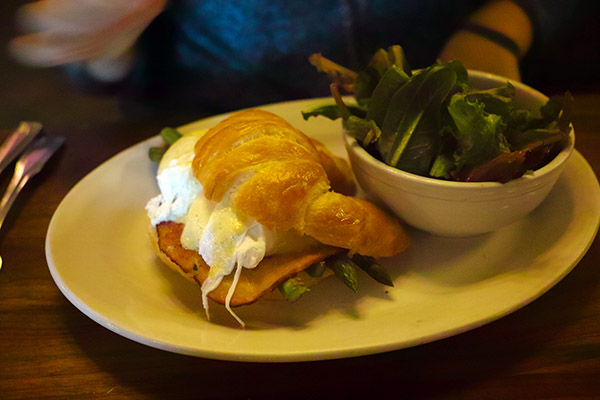
 He looked down at his plate. Bezos had ordered a dish called Tom’s Big Breakfast, a preparation of Mediterranean octopus that includes potatoes, bacon, green garlic yogurt, and a poached egg. “You’re the octopus that I’m having for breakfast,” Rutledge remembers Bezos saying. “When I look at the menu, you’re the thing I don’t understand, the thing I’ve never had. I must have the breakfast octopus.”
 
 Not until Rutledge had returned to Dallas and related the story to his anxious employees—now Amazon’s employees—did he realize just how absurd that explanation sounded. Before it can be eaten, generally, the breakfast octopus must be killed.

Letter to a Friend

My Cup Runneth Over” – Psalm 23:5

“What should I do? What did you do? How do I know? Stay or go?”

Questions arrive from time to time. One after another in short order. Inevitably, I reflect on the gifts of my journey.

How did I get here?

Riding around in my Grandfather’s car (1957 Chevy) mowing lawns lead to working with my dad selling tractors in high school and college, which begat a lifelong mentor relationship which further begat numerous business and personal opportunities.

A flight from Chihuahua to Juarez while a student leads to a kind ride across the border from two corporate types.

A chance meeting at a ski show swerves into an introduction to my future wife.

A sermon, perhaps given ten years ago has long stayed in my mind: “Worry is rust on the saw blade of life”. The words were based on Matthew 6:25-34 which begins:

“Therefore I tell you, do not worry about your life, what you will eat or drink; or about your body, what you will wear. Is not life more than food, and the body more than clothes? 26 Look at the birds of the air; they do not sow or reap or store away in barns, and yet your heavenly Father feeds them. Are you not much more valuable than they? 27 Can any one of you by worrying add a single hour to your life[a]?”

Teachers, professors and mentors that went the extra mile.

A chance conversation at the gym leads to a friend in Istanbul.

My parents taught me to be opportunistic and persistent. Indeed. My cup runs over. So thankful. They also taught me that the Lord giveth and taketh away.

My answer to these questions: trust in God. Take advantage of the many opportunities that arise. Work hard.