Wisconsin Voters


Monica Davey talks with some Wisconsin voters on the upcoming presidential election:

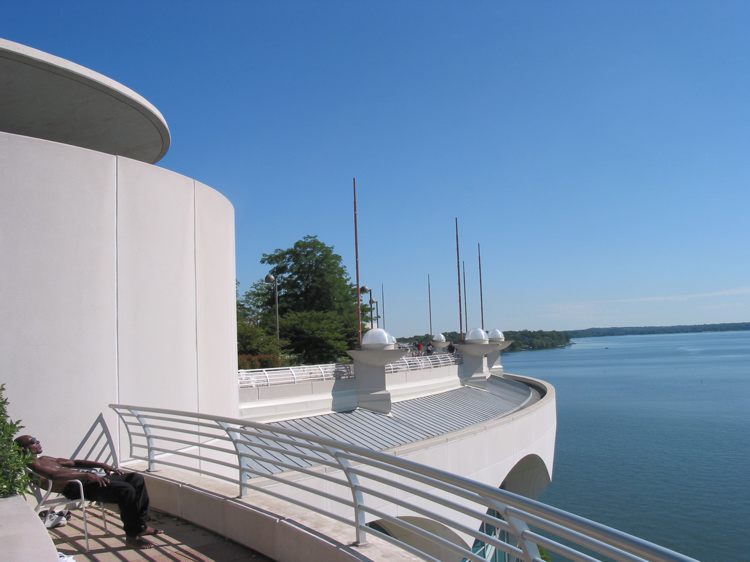
“Honestly, I don’t know what to do,” Ms. Zavala said as she wandered near Lake Michigan clutching the hand of her young granddaughter. Ms. Zavala voted for President Bush in 2000 and says her relatives still adore him. Never far from her thoughts, though, is that her son-in-law is a soldier, and so her uncertainty keeps growing.
“Now, when I look at it, I think Bush misled the people about Iraq, and I feel sad for all the families, for all these soldiers that had to die,” she said. “But then I don’t really know what Kerry would do about it either.” Ms. Zavala stopped, then finally said, “I guess I can only wait and see what happens.”
There lies a central complication for the campaigns as they fight for a state that gave Al Gore just an ounce more support than George W. Bush four years ago. From working-class neighborhoods in Racine in the southeast to the pine- and fern-covered hills near Lake Superior, voters speak of factories that have closed, schools short on money and health insurance beyond reach.
Interview with Grateful Dead Lyricist John Perry Barlow

Reason posts a useful interview with John Perry Barlow (currently vice chair of the EFF):

Every existing power relation is up for renewal with cyberspace, and it was only natural there would be an awful lot of fracas where cyberspace met the physical world. EFF has been the primary mediator on that border. We have been very successful at protecting against excessive government encroachment into the virtual world.
Copyright and intellectual property are the most important issues now. If you don?t have something that assures fair use, then you don?t have a free society. If all ideas have to be bought, then you have an intellectually regressive system that will assure you have a highly knowledgeable elite and an ignorant mass.

Healing Garden(s)

Susan Fornoff writes about Topher Delaney’s healing gardens:

Lavender flanks an antique French urn that serves as a fountain in one corner; lemons climb on the two antique French gates that delineate the garden’s three “rooms,” each with a terra-cotta colored bench designed by Philippe Starck.
There are tomatoes growing; bay, rosemary, a rose bush, nasturtiums, too. Aloe and opuntia elaborate on the medicinal theme, and jasmine surrounds the base of the visual centerpiece, an Italian fountain surrounded by a shelf of Haifa limestone.
“This is very beautiful stone, from Jerusalem,” Delaney says. “You see it in very lovely homes; you never see it in a hospital.” She looks around. “This is as good as it gets in the most fancy house you could ever find. This is as good as it gets.”

Paradise off Highway 10


The Hertz airport shuttle brought a must unexpected surprise today. The inquisitive driver asked if I was flying to Denver. No, I said, San Francisco was my destination. “It will be 40 degrees cooler there than it is here in Phoenix.” I replied that it was 107 last night, when I landed.
“My place is wonderful, and cool. I have cottonwoods on my property which provide a very pleasant shade. In fact, during June, I put up a hammock under the cottonwoods, setup a fan and slept outside at night with my three golden retrievers. Beautiful.”
Where might this paradise be?
“50 miles west of Phoenix, 2 miles north of I-10, the other side of the White Mountains. I bought the 10 acres 50 years ago for $250.00 (!). I bought it and planted those cottonwoods.” My annual property tax bill is $60.00. Those golden retrievers keep an eye on the property during the day.
How’s the commute?
“I drive 65 (the I-10 speed limit is 75). I arrive before all those people flying past me.”
I asked if civilization has encroached on his paradise?
“There’s no one within 5 miles.”
With that, I continued my journey to San Francisco.

Using the Tax Code to Fix Health Care

Interesting ideas, certainly worth discussion:

We propose a simple change that will fundamentally alter the way people buy health care. All individually purchased insurance and out-of-pocket expenses would become tax deductible for persons who have at least catastrophic insurance coverage. The tax deduction could be taken by persons who claim the standard deduction on their tax returns and those who itemize deductions. All purchases of health care would receive the same income tax treatment.
With a level playing field, workers will no longer have a tax incentive to take their compensation in the form of expensive health insurance with low copayments and will shift to health plans with higher deductibles and higher coinsurance rates. Market forces will ensure that the insurance premium savings will be passed on to workers in the form of higher money wages. Just as workers have borne the burden of rising health care costs, so will they reap the benefits when costs are brought under control.